
1418 days — longer than the war between the USSR and the Third Reich: what are the reasons for such a duration
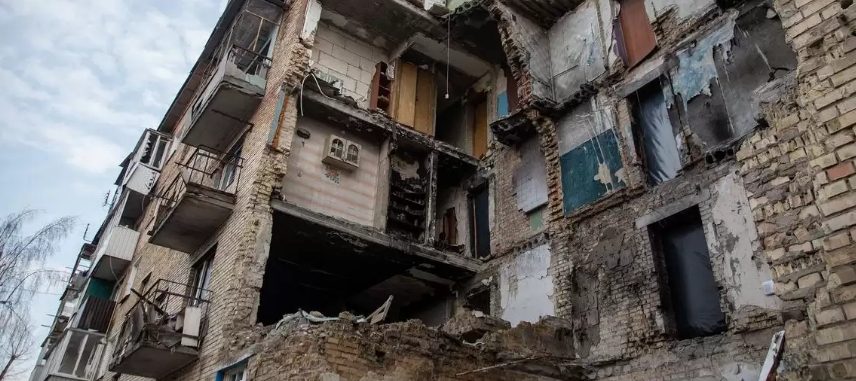
On January 11, the full-scale Russian invasion of Ukraine has been going on for 1418 days. This figure is symbolic, since it was exactly that long — from June 22, 1941 to May 9, 1945 — that the war between the USSR and Nazi Germany, which in Russia is still called the Great Patriotic War.
This date was marked by numerous Russian media and propaganda channels, while at the same time asking why the modern war turned out to be so protracted. The discussion comes from different positions: supporters of the earliest possible peace emphasize the horror of the duration of the conflict, which has already surpassed the bloodiest war in history in terms of time, while adherents of the “victorious end” call for “finally getting down to business seriously.” In Ukraine, this line is often mentioned with the remark: “In 1418 days, the Red Army reached Berlin, while the Russian army cannot even take Kupyansk.”
The answer to the question of the reasons for the protracted war lies on the surface. The first year of the conflict destroyed the Kremlin’s general plan for a quick victory or capitulation of Ukraine. The second year buried the hopes of Kyiv and its allies for a strategic defeat of Russia on the battlefield, in parallel with economic collapse and internal instability. It was replaced by a phase of a war of attrition, in which neither side has a decisive advantage.
Ukraine does not have sufficient resources to defeat the Russian Federation without direct NATO intervention, which the Alliance is not going to do, avoiding the risk of nuclear confrontation. Russia, although it has the potential for radical strengthening (nuclear weapons, total mobilization, a complete transition to military rails), does not want to take excessive risks and costs.
An important deterrent for both sides is the financial component of modern warfare. Unlike World War II, today soldiers have to be paid significant amounts of money, and compensation for the dead is a huge burden on the budget. A sharp increase in the army and the intensity of the fighting will lead to unsustainable costs, which are already approaching the limits of the economies of both countries.
The nature of the fighting also contributes to a protracted positional war. The complete dominance of drones over the battlefield makes mass breakthroughs of the front practically impossible, reminiscent of the situation during the First World War. Only a technological breakthrough can bring a solution, for example, a cardinal advantage in “kamikaze” drones or the emergence of combat robots for assault operations.
Until this happens, the strategy of both sides is reduced to the expectation that the enemy will be exhausted first. Ukraine is counting on Russia’s economic problems worsening due to sanctions and strikes on oil refining, as well as the Kremlin facing the impossibility of replenishing its army with contract soldiers only and being forced to declare mobilization, which will cause a social explosion. Kyiv’s main hope is internal destabilization in Russia.
Moscow, in turn, expects Ukraine to run out of human resources and its energy system to collapse, which will lead to the collapse of the front and rear, and subsequently to the fall of the current government. Since Russia has a greater resource potential, it has the initiative and is slowly advancing, although it cannot achieve a decisive breakthrough.
Ukraine’s ability to increase its efforts is sharply limited. Even a hypothetical reduction in the mobilization age will not give a strategic advantage due to a lack of funds and an inaccurate distribution of resources between the front and rear. Such a measure will only help to “patch” gaps in defense.
Russia, on the other hand, has not yet used two main tools: nuclear weapons and general mobilization. For a radical change at the front, it would need to increase its grouping to 1.5–2 million people, which requires the conscription of at least 800,000 additional people. However, such a step will cause serious economic losses due to a shortage of labor, a sharp increase in military spending, and the need to transfer the entire economy to military rails. The Kremlin is clearly not ready for such measures, trying to preserve a sense of “normal life” in society.
The use of nuclear weapons also carries unacceptable risks for Moscow: global isolation, environmental catastrophe, and the absence of an existential threat to the state that would justify such a step. The complete subjugation of Ukraine is not a matter of survival for Russia, even if the government hostile to the Russians remains in Kiev.
The future of the conflict depends on which scenario prevails:
A quick end to the war is possible if Trump’s peace plan is agreed upon. The main obstacles are Russia’s demand to withdraw Ukrainian troops from the Donetsk region and Moscow’s refusal of foreign military security guarantees for Ukraine. A compromise or pressure from Washington on both sides could lead to a ceasefire.
A continuation of the war of attrition is the most likely inertial scenario if peace talks reach a deadlock and Trump is unwilling or unable to exert decisive pressure.
Escalation due to US pressure – if Trump, under pressure from Kyiv and European allies, sharply tightens sanctions, increases arms supplies, or intensifies the seizure of Russian assets. In response, the Kremlin may take dangerous steps, including the threat of using nuclear weapons.
The coming months, January-February, should be decisive. By the end of January, Russia, according to Volodymyr Zelenskyі, must respond to a new version of the peace plan. After clarifying positions in February, a key decision on further developments may be made.