
Environmentalists recorded the consequences of the shelling of Zaporizhzhia – what they found in the Shevchenkivskyi district
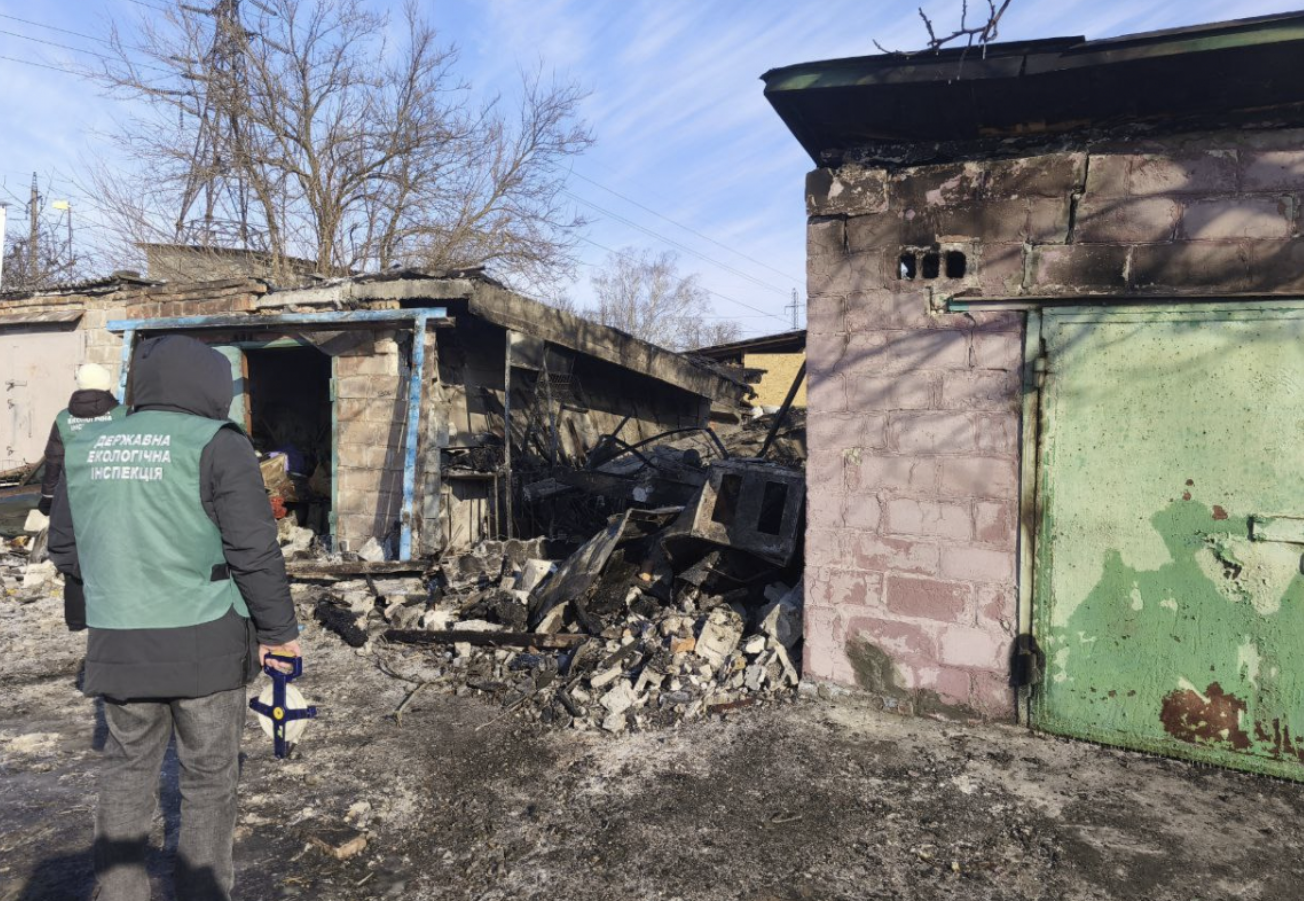
After the night attack on the city, environmental inspection specialists examined the damaged areas and documented the debris from the destruction.
On the night of January 20, Russian troops attacked Zaporizhzhia again. As a result of the shelling, four houses in two districts of the city were damaged. This was reported by the Zaporizhzhia City Council.
It is noted that three private sector houses were damaged in the Shevchenkivskyi district. Windows were broken and roofs were damaged there. The consequences of the attack were also recorded in the Kosmichnyi district, where one apartment building was damaged.
As of this morning, utility services covered the broken windows in three private houses in the Shevchenkivskyi district with OSB sheets. The work was carried out to temporarily protect the apartment from cold and precipitation.
The consequences of the night shelling were also recorded by ecologists. The State Ecological Inspectorate reported that specialists from the State Ecological Inspectorate of the Southern District conducted an on-site inspection of the damaged territory of the Shevchenkivskyi district of Zaporizhzhia.
During the inspection, the territory was found to be littered with demolition waste in two locations. The area of contamination is about 150 square meters in one area and about 100 square meters in another.
All the discovered facts were documented. So, the materials were transferred to law enforcement agencies, as well as to the Operational Headquarters of the State Ecological Inspectorate of Ukraine. Currently, experts have begun calculating the damage caused to the environment as a result of the shelling of Zaporizhzhia.
Earlier, we wrote that environmental inspectors calculated the damage to the air in the Zaporizhzhia region during the war. According to the agency, from February 24, 2022 to January 1, 2026, specialists registered more than 780 cases of emissions of hazardous substances into the atmosphere. The main cause of such emissions was shelling by Russian troops and fires that arose as a result of hostilities in the region.