
Hungarian Foreign Minister regularly informed Russia about EU meetings
The government of Hungarian Prime Minister Viktor Orbán has been providing Moscow with access to closed discussions in the European Union for years. This was reported by several current and former European security officials, including the former head of Hungary’s cyber defense service, Ferenc Fres.
According to them, access was provided in two ways: through the presence of Russian allies in the Hungarian government, and through the penetration of the computer networks of the Hungarian Foreign Ministry by Russian hackers.
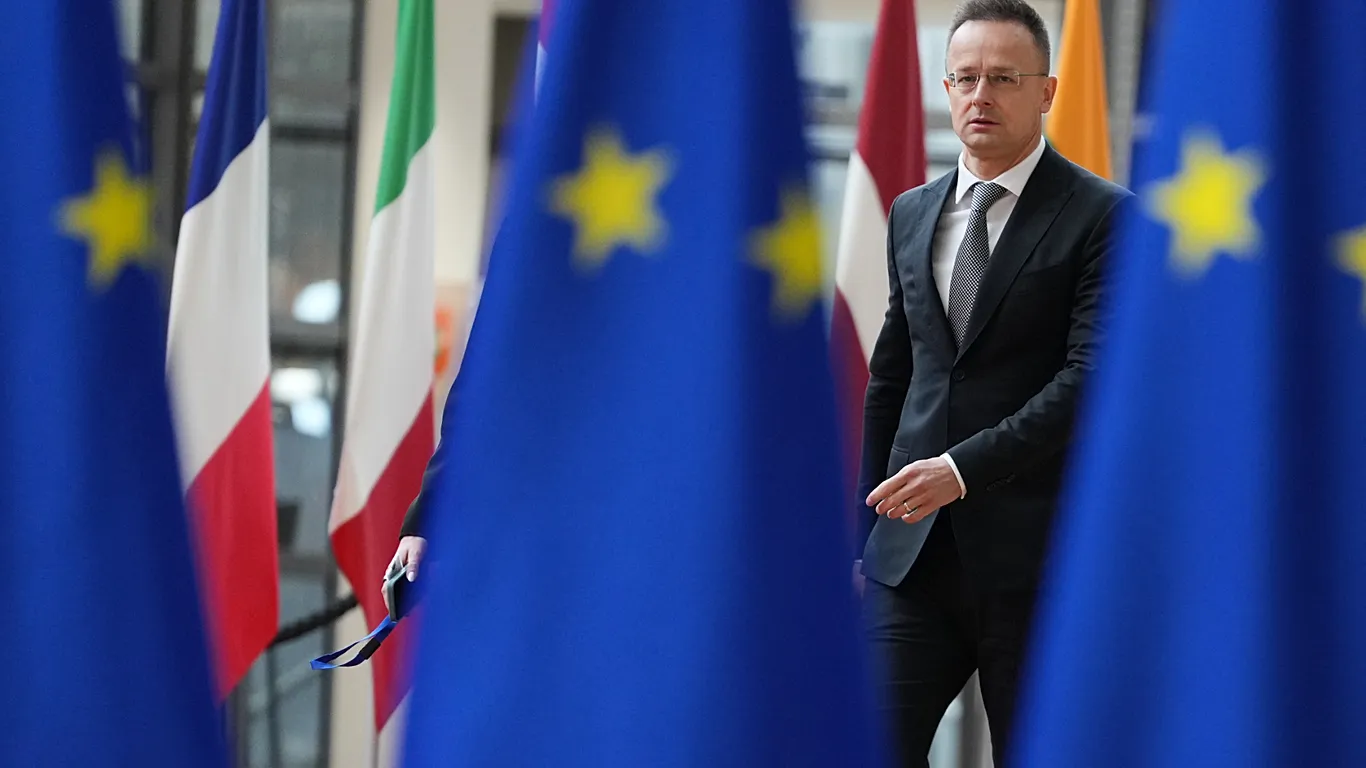
Separately, the interlocutors drew attention to the actions of Hungarian Foreign Minister Péter Szijjártó. According to one of the European officials, during breaks in EU meetings, he regularly called Russian Foreign Minister Sergei Lavrov and provided “operational reports on what was being discussed” along with possible solutions.
As a result, the same official noted, “every EU meeting for years has effectively taken place with Moscow at the negotiating table.”
Since the start of Russia’s full-scale invasion of Ukraine in 2022, Szijjártó has made 16 official visits to Moscow. The most recent was on March 4, when he met with Russian President Vladimir Putin.
Viktor Orbán, who positioned himself as an opponent of the communist regime after the collapse of the Soviet Union, led Hungary to NATO membership during his first term as prime minister from 1998 to 2002 – despite Moscow’s objections. At the same time, after returning to power in 2010, he changed his foreign policy course and began to actively develop relations with Russia, while simultaneously promoting conservative rhetoric.
Another area of cooperation was the decision of the Orbán government in 2014 to transfer the contract for the construction of a new power unit of the Paks NPP (Paks II) to the Russian state corporation Rosatom. The project is financed by a 10 billion euro loan from the Russian state bank VEB, with about 40% of the funds to be received by Hungarian contractors.
Against the backdrop of the election campaign, Orbán is positioning himself as a “peace candidate”, while simultaneously criticizing his opponent Peter Magyar and calling him a politician who allegedly acts in the interests of Brussels and could drag the country into the war on the side of Ukraine. Both politicians held large-scale rallies, claiming a record number of participants.
Against this background, Russian intelligence agencies have also become more active, trying to influence the course of the campaign. This is not only about analytical materials, but also about specific actions against opposition candidates.
In particular, Russian operations included the creation of an AI-powered video to discredit Tysa Party candidate Maria Gurzo. In addition, another candidate, Erwin Nagy, was accused of beating a local woman, using fake documents and photos, which were distributed through the media and social media.
Source: https://bukvy.org/glava-mzs-ugorshhyny-regulyarno-informuvav-lavrova-pro-perebig-zasidan-yes-wp/