
Russia is preparing to seize thousands of apartments in Mariupol: owners are being forced to re-register their homes by July
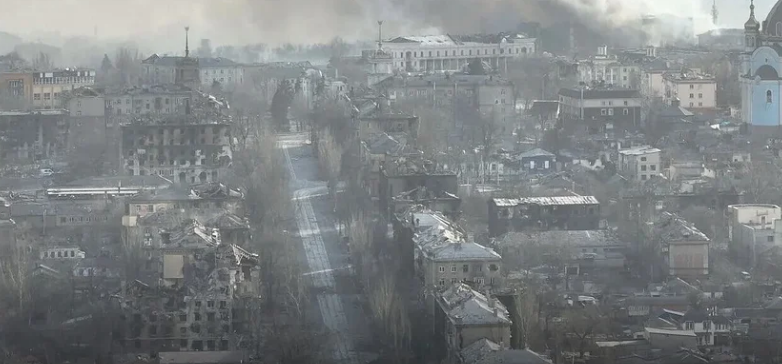
In occupied Mariupol, the Russian authorities are threatening to seize housing from Ukrainians who do not receive a Russian passport and register their property rights according to Russian rules by July. This mechanism no longer works as a formal bureaucratic procedure, but as a tool for consolidating Russian control over the occupied territories and displacing Ukrainian owners.
This is a new procedure that allows the Russian administration to seize “residential buildings, apartments and rooms that look abandoned.” The law was signed by Vladimir Putin in December. For Mariupol, where up to 90% of residential buildings were damaged or destroyed after an 86-day siege in 2022, this creates a new risk of mass loss of housing not due to hostilities, but due to administrative re-registration of property.
Currently, about 13 thousand apartments in Mariupol are already considered “abandoned.” The city’s Russian-appointed mayor, Anton Koltsov, has said that the apartments are planned to be handed over to some of the approximately 6,000 families on the official housing waiting list. At the same time, Human Rights Watch has identified about 8,000 court cases filed by Russian authorities across occupied Ukraine from March 2024 to January 2026 to confiscate such property.
In practice, it is almost impossible for many Ukrainians to comply with the new requirements. Owners must personally come to the occupied city, submit documents, and go through Russian procedures, but Russia simply does not allow some people into its territory. The New York Times cites the story of a Mariupol resident whose daughter, for whom the apartment is registered, lives in Poland and was banned from entering Russia for 20 years while trying to enter through Moscow. In such a situation, the apartment can be formally recognized as “abandoned,” even if members of the owner’s family live in it.
A separate contrast is that Moscow simultaneously presents Mariupol as a showcase for “reconstruction.” The Russian authorities claim to have built about 5,000 new apartments in the city and have almost solved the housing problem. But, as The New York Times notes, reconstruction is concentrated primarily in the visible central areas, while many residents still have no permanent housing, wait for years for compensation or live in destroyed neighborhoods and temporary housing.
Another important element is the changing composition of the population. In the city center, Ukrainians without a Russian passport are not allowed into new apartments, while most of such housing is bought by Russian citizens, who are attracted by cheap apartments and preferential mortgages at 2%. For comparison, ordinary mortgage rates in Russia are now much higher – about 15-20%.
For Ukraine, this story is important not only as a humanitarian story. This is about a long-term change in the property map of the occupied city, the displacement of Ukrainian owners, the settlement of Mariupol by Russians, and the creation for the outside world of a picture of an allegedly irreversible “new status quo.” In fact, Russia is trying to turn the occupation into a formal property fact through housing and documents.