
Russia is luring not only Africans to the war – Russian recruiters have become more active in Latin American countries
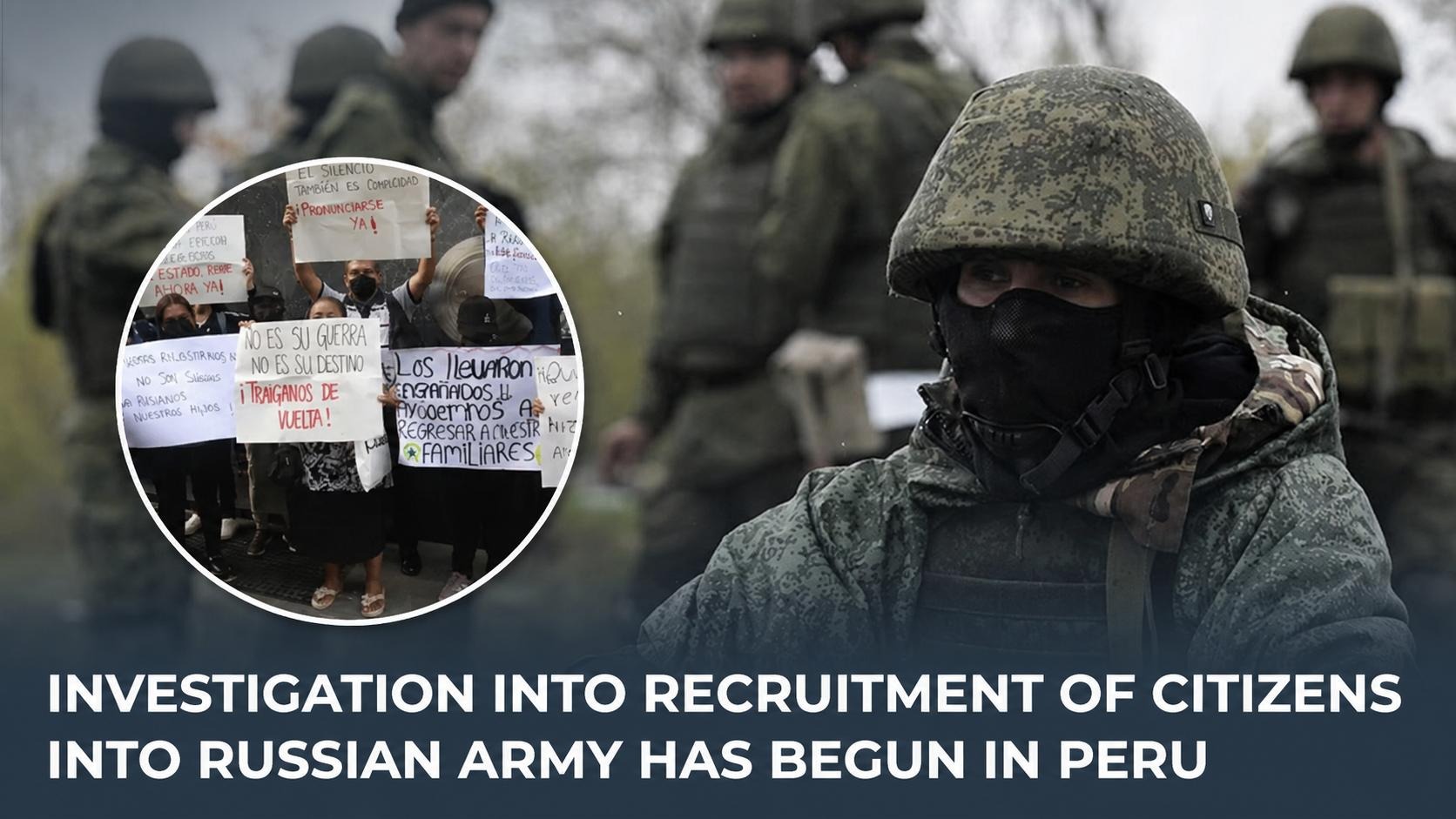
Hundreds of Peruvians have ended up on the front lines in Ukraine – they were fraudulently recruited under the guise of working as cooks and security guards in Russia.
Russian recruiters are fraudulently sending Peruvians to the front lines.
Hundreds of Peruvians have ended up on the front lines in Ukraine – they were lured there with promises of well-paid civilian jobs in Russia. At least 12 cases of recruitment involving Peruvian citizens have been recorded, most of whom are from poor families. Relatives of the missing men are protesting near the Russian embassy in Lima and the Peruvian Ministry of Foreign Affairs.
While Russia continues the war in Ukraine, it is making significant efforts to replenish the ranks of its army – in particular, it is recruiting foreign fighters from developing countries, promising high salaries and bonuses. Numerous men from African countries were forcibly recruited into the Russian military after being offered civilian jobs as drivers or security guards. Now a similar scheme has spread to Latin America.
The last time a mother named Norma saw her son was in late January when she took him to the airport in Lima. He told her that he had found a job as a cook through an ad on social media, assured him that he would be far from the war, would earn well, and could even be granted Russian citizenship.
Shortly after, he sent his mother a video of himself digging trenches and building bunkers with other foreign fighters in the forest in occupied Ukraine. The video call ended in early April when the man said that his commander was “punishing him for his misconduct.”
Another Peruvian, a prison guard from Lima, signed a contract through a local recruiter without any military experience. However, he agreed to join the Russian army for a one-year contract. The recruiter promised medical insurance and repatriation in case of injury. According to other Peruvians, the man was killed by a drone strike.
The Peruvian prosecutor’s office is investigating 36 complaints from citizens of the country whose relatives or friends were deceived by fictitious offers of work abroad – specifically in Russia – with the aim of taking them out of the country and forcibly participating in the war. The proceedings have been initiated under the article on human trafficking.
The Peruvian government has sent at least 247 separate requests to Moscow for information on Peruvians in the Russian army and demanded the immediate and safe return of its citizens to their homeland. Lawyers representing the families of the recruits estimate the total number of Peruvians in the Russian army at 800.
Several countries have already issued official protests against the recruitment by Russia. Kenya’s foreign minister has personally flown to Moscow to demand an end to the recruitment of Kenyans, calling the flow a “human trafficking network.” Similar recruitment networks operate in African countries and Nepal – after Russia found several thousand soldiers there, Nepal banned travel to Ukraine or the Russian Federation for employment.
The scale of foreign recruitment has increased to record levels. This year, Russia plans to recruit a record number of foreign fighters – 18,500 people. The Kremlin has been practicing the practice of recruiting migrants instead of Russians for several years, replacing its own losses with foreigners from dozens of countries. The recruitment of foreigners is intensifying against the backdrop of massive Russian losses and is becoming a challenge to global security.
In addition, Russia has recruited at least 42,000 foreigners to its army to wage war against Ukraine – and every fifth of them is already dead. Mercenaries are lured with promises of high earnings, and on the front lines they find themselves without documents and proper training.