
Ecocide in the Askania-Nova Reserve
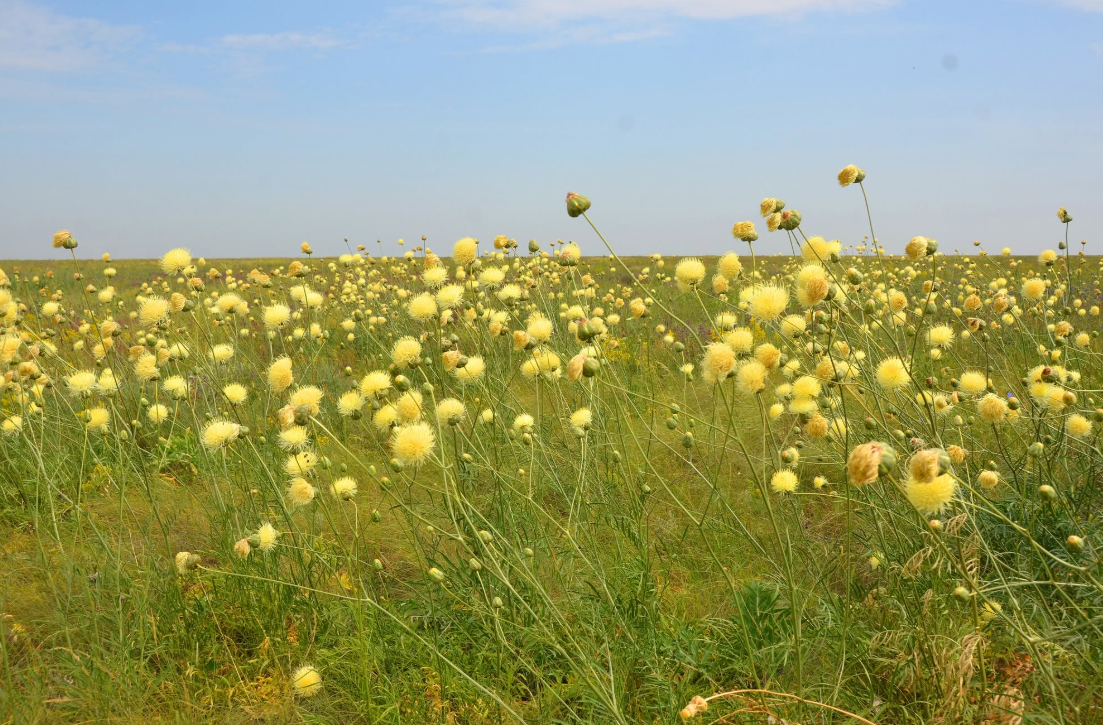
The world-famous Askania-Nova Biosphere Reserve is on the verge of an ecological disaster: the Russians are burning the grass cover and destroying rare insects and plants. On June 29, a large-scale fire broke out here. The fire destroyed a third of the Pivdenna reserve and Red Book species of plants and insects.
This was reported by the head of the laboratory for the conservation of wildlife diversity of the reserve, former director of Askania-Nova Viktor Gavrylenko.
The burnt grass cover ensured water balance and temperature regulation. The fire affected seeds, spores, insects, egg-laying, and habitats of rare species of hymenoptera – bumblebees, sphexes, and variegated ascalaf.
The densest population of Taliev’s cornflower – a plant listed in the Red Book of Ukraine – was destroyed.
The scorched earth resembles a scorching black plain, where dust storms regularly form. During cloudy weather, tornadoes can even occur there. Repeated fires prevent the full natural restoration of the steppe ecosystem, as it lasts about 11 years.
“It is difficult to predict what the future of the largest protected steppe ecosystem in Europe will be today. The example of hostilities in protected areas along the lower reaches of the Dnieper River already shows: the changes that nature undergoes as a result of the war will go far beyond the lifetime of the current generation of scientists,” Viktor Gavrylenko noted.