
They remember the atrocities of the Russian troops. Kadyrov does not want to send Chechens to war in Ukraine
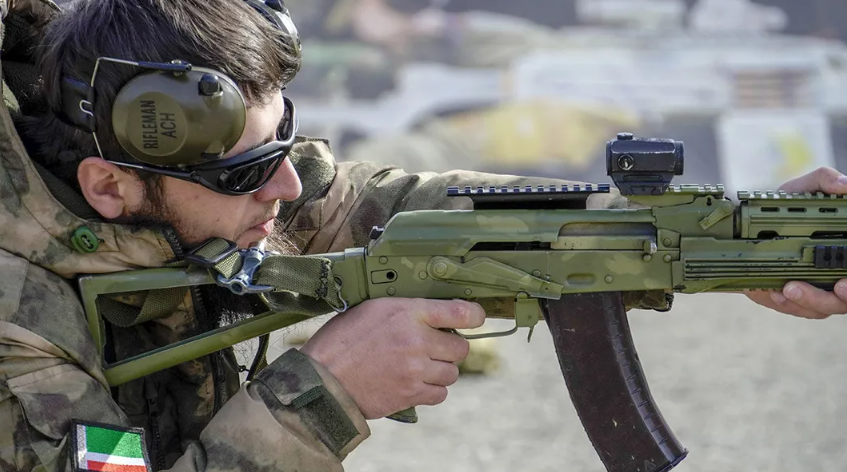
Despite public statements about his readiness to support Russian dictator Vladimir Putin in the war against Ukraine, the head of Chechnya, Ramzan Kadyrov, is actually avoiding sending Chechens to the front en masse. Kadyrov does not want to sacrifice the republic’s population for the sake of the “Russian world”, while using the war to strengthen his own power and suppress disloyal ones.
This is reported by The Economist, citing an interlocutor close to the Chechen leadership.
The publication emphasizes that Kadyrov’s speeches are full of belligerent rhetoric about the West and assurances of loyalty to Vladimir Putin. “We are ready to advance in any direction that the Supreme Commander-in-Chief determines … [our] special forces are literally burning with the desire to carry out extremely complex tasks,” Kadyrov said on July 18. He previously claimed that Chechnya had sent more than 70,880 fighters to war — 9% of the republic’s male population.
That would be the highest figure among all Russian regions. However, according to the Russian media outlet Mediazona, which keeps track of Russian military casualties, as of July 10, the number of Chechen deaths was only 539. That’s 0.2% of Russia’s total losses, even though Chechnya accounts for 1.1% of the country’s population.
After two brutal wars that Russia waged between 1994 and 2009 against its once-rebellious North Caucasus region, few Chechens are eager to fight for Russia.
“Whatever Moscow’s interests in Ukraine are, we are a world away from them,” says a prominent Chechen close to the republic’s leadership. Although Kadyrov boasts of his role as Putin’s “foot soldier,” “he understands the situation very well” and is unwilling to sacrifice his people for the sake of the “Russian world.”
The Economist emphasizes that Chechens have special reasons to dislike war. Locals over 35 remember the bombings and “mopping-up” operations during which Russian troops committed atrocities in Chechnya long before they began doing the same during the war in Ukraine, particularly in Bucha.
In exchange for his loyalty, Kadyrov has received more power from Putin than any other Russian governor. So far, he has effectively prevented forced mobilization for the war in Chechnya. This has allowed him to use the war to his advantage, reinforcing his image as the “father of the nation” who protects his countrymen.
Kadyrov’s real opponents are long dead or in exile. At the same time, he uses the war to test the loyalty of suspects. In particular, Apti Alauddinov, who was suspected of conspiring against Kadyrov, was appointed commander of Akhmat, a Chechen special forces unit fighting in Ukraine.
Many of Akhmat’s fighters are known not so much for their combat successes as for their activity on social media. Videos of their supposedly heroic battles are often filmed far from the front lines. Even Russian military bloggers call them “TikTok troops.”
“They seem to be participating [in the war], but they have been ordered not to overdo it and to protect themselves,” says a source close to the Chechen leadership. According to the commander of Akhmat himself, only a quarter of his fighters are Chechens. The rest were recruited from outside Chechnya for money that Kadyrov receives from Moscow.
At the same time, some Chechens are forced to go to the front — Kadyrov uses the war as an instrument of repression. People he considers undesirable are sent to the front: criminals, relatives of opposition figures, alcoholics, and gays. According to Novaya Gazeta, district police chiefs have been tasked with finding 25-50 people each month who can be forced to sign a contract with the Russian Defense Ministry. It costs $3,000-6,000 to buy them off. However, some Chechens are voluntarily fighting on the Russian side. Ilyas Jamalutdinov went to the front after the invasion, took part in the capture of Mariupol, was wounded, and returned to the fighting. He believes that the wars in Ukraine and Chechnya were provoked by the West. Jamalutdinov had already seen war as a child—his father, who fought on the Russian side, gave him a machine gun during the first Chechen war. “All I’ve seen in my life is war,” he says.