
How Russia lures Kenyans into the war against Ukraine
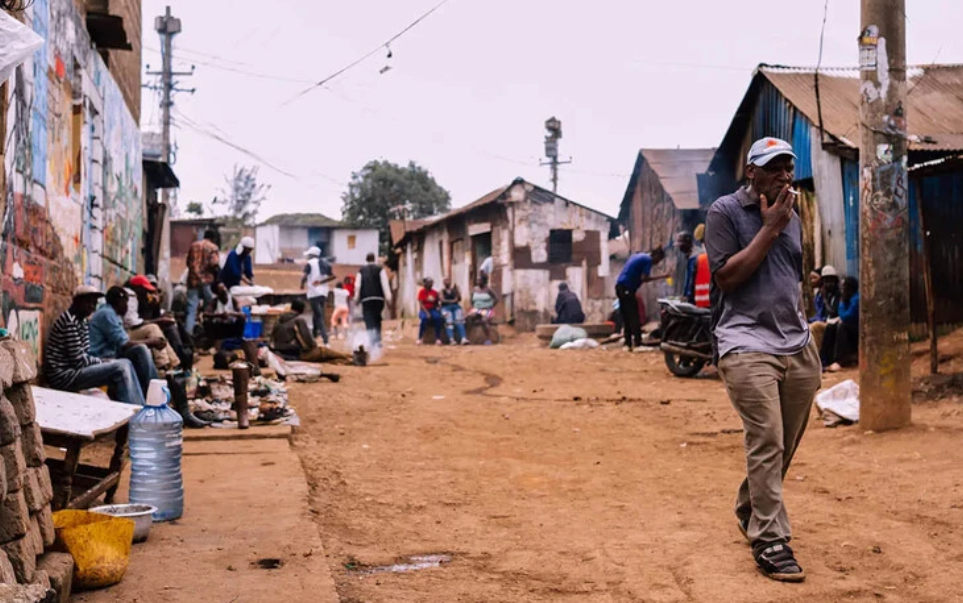
Former fighters recounted that disobedience was punished by death, and in one unit, only one in ten survived.
Kenyan citizens are being recruited into the Russian army under the guise of civilian employment and thrown into combat, notably near Vovchansk in the Kharkiv region. According to Kenyan intelligence estimates, over a thousand citizens have gone to fight for Russia. Dozens have been killed, and many have ended up in Ukrainian captivity, reports «The Observer».
One of the subjects of the investigation, a Kenyan named Stephen (name changed), served in the Kenyan Air Force for ten years before working in the auto parts trade. His business was looted during protests in 2005. In June 2025, he saw an online advertisement for a security guard job in Russia, offering a large signing bonus and a monthly salary of around £3,000.
Within a few weeks, Stephen was in Vovchansk. The journey to the front line was short: first, a visa and a flight to St. Petersburg via Istanbul. In Russia, the recruits were asked to sign documents in Russian, the contents of which they did not understand. They then opened bank accounts, were transported to a military camp over the course of several days, and underwent about three weeks of basic training.
“I don’t want to resort to stereotypes, but white people don’t like Black people. We were the ones sent in first,” Stephen said. At the front, deliveries of ammunition, food, and even water were sporadic. The remnants of his unit survived for days by eating insects until drones dropped supplies to them. After several weeks of combat, Stephen stepped on a mine, sustaining severe shrapnel wounds and internal bleeding. He estimates that 90% of the soldiers in his infantry unit were killed.
In early 2026, while Stephen was undergoing treatment in St. Petersburg, an acquaintance at the Kenyan embassy in Moscow helped arrange his flight home. He paid for the ticket with his own wages, meaning everything he had earned during the war went toward the journey. Now, he is unemployed and lacks the money for medication.
Stephen had been recruited by the agency Global Faces Human Resources. Its manager, 33-year-old Festus Arasu Omwambu, was detained at the Ethiopian border after 22 Kenyans were found in a residential complex, waiting to be sent to Russia. In February, Omwambu pleaded not guilty to human trafficking charges; he was released on bail in the spring. His current whereabouts are unknown.
Another Kenyan, Duncan Chege—who is in his early thirties—responded to an advertisement for a driving job in Russia last summer. His mother took out a loan to pay the recruitment agency’s fee. Instead of a steering wheel, however, he was given a weapon and two weeks of training, after which he found himself in Donetsk serving with the Wagner Group. “I told the commander I didn’t want to fight Ukrainians, that I wanted to return home. But he replied: ‘We trained you and fed you. You can’t refuse,'” Chege recounted.
It was no idle threat: disobedience was punishable by death, journalists report. Chege secured a medical leave by feigning insanity and subsequently escaped from the hospital in Moscow. He bought his ticket home using money his mother had raised by selling a cow; he never received his wages.
Journalists discovered recent Facebook posts showing at least two dozen young Kenyans departing from Jomo Kenyatta International Airport for jobs in Russia. The advertisements offer positions in agriculture and the food industry. They were created using the same AI templates as the military recruitment ads. In one photo, men pose wearing hoodies bearing the logos of the Nairobi-based agency Wings Recruitment and the Russian company BRICS Mobility. The publication notes that there is no evidence suggesting the work is anything other than civilian employment. Wings insisted they operate legally. BRICS Mobility issued a statement claiming that unscrupulous agencies in Africa might be misusing its name.
Officially, Kenya is attempting to halt this flow. In February 2026, Kenyan Foreign Minister Musalia Mudavadi reached an agreement with Sergey Lavrov in Moscow that Kenyans would no longer be recruited into the Russian army. “They will no longer have the right to be recruited,” Mudavadi stated at the time. The parties also pledged to repatriate anyone who wished to return. In March, Nairobi announced an amnesty for returnees, as serving in a foreign army carries a penalty of up to 10 years in prison for Kenyans. Law enforcement authorities have shut down more than 600 recruitment agencies.
However, the problem extends beyond Kenya. Researchers from the organization Code for Africa discovered that recruiters are posting AI-generated advertisements on Meta and TikTok—including calls for actors and extras in Russia. This month, advertisements explicitly offering “military contracts in Russia” were circulated in Côte d’Ivoire.
According to «The Observer», Russia loses approximately 30,000 troops per month, and the Kremlin is willing to do whatever it takes to avoid a mobilization of its own citizens—a move that would be costly both politically and demographically.
Russian recruiters are increasingly active on Western platforms; searches on Google and Facebook lead users directly to recruitment websites. Data released in May indicated that 28,000 foreign nationals from 135 countries had already been recruited into the Russian army, with Moscow planning to enlist another 18,500 in 2026.
Using the same methods employed with Kenyans, Russia has lured citizens from Nepal, Cuba, and India, and is now recruiting Indonesians. A specific channel also exists for Kenya: the Russian Orthodox Church’s African Exarchate has sent young people to Russia, ostensibly for seminary studies or employment.
Source: https://zn.ua/ukr/war/the-observer-jak-rosija-zamanjuje-kenijtsiv-na-vijnu-proti-ukrajini.html