
Investigators Identify Organizers Behind North Korean Labor Supply to Russia
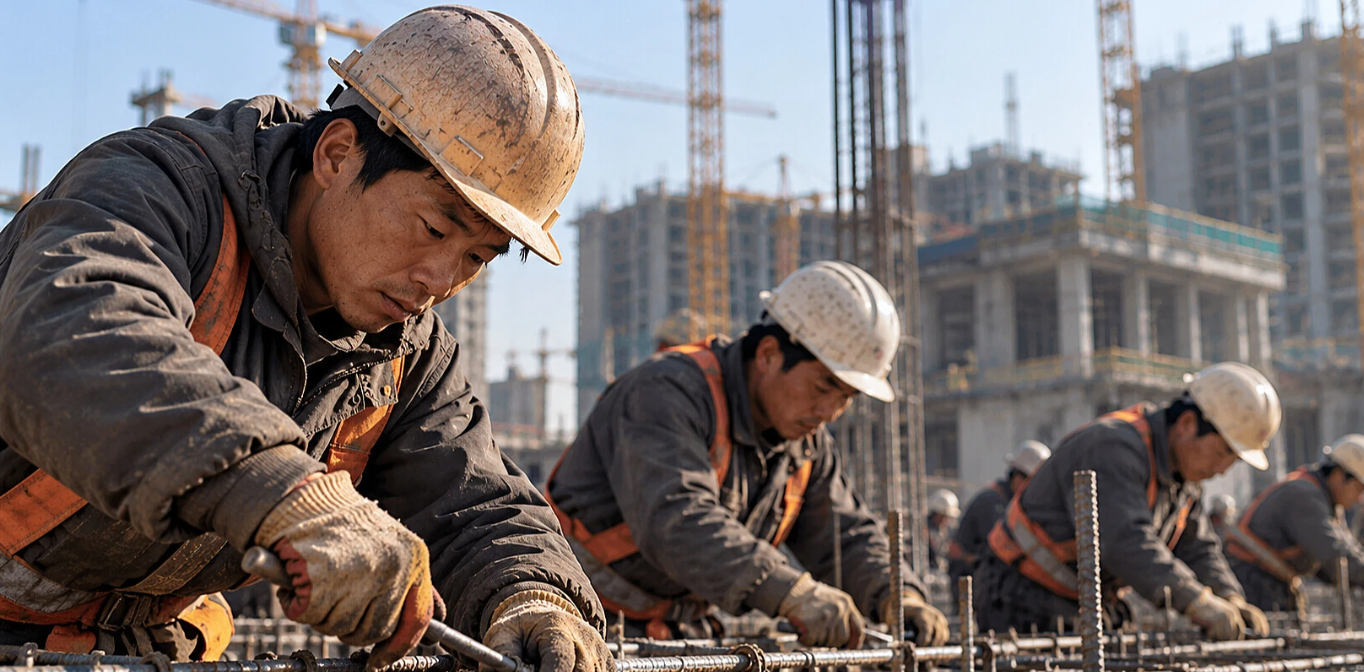
An organized network of intermediaries operates in Russia, supplying workers from North Korea to industrial enterprises—including those linked to military production. Investigators have identified specific companies and the organizers of a scheme that allows Russian businesses to access cheap labor, while enabling Pyongyang to generate additional revenue in circumvention of international sanctions.
This was reported on October 29 by the *Financial Times*, citing a new investigation by the international human rights organization Global Rights Compliance (GRC), based in The Hague.
https://www.ft.com/content/cd2d6011-3c25-464f-bb81-2ef6d2c88f27
Investigators identified the “Black Horse” group of companies, led by Moscow-based entrepreneur Vladimir Sokolov, as a key link in this network. Through a specialized website, KNDR.su, the group offered Russian employers organized teams of North Korean workers for the industrial, construction, and agricultural sectors.
The website advertised work crews ranging from 50 to 100 individuals, ready to work 12 hours a day, 28 days a month. The intermediaries highlighted the workers’ discipline and the lack of any risk of them absconding—explaining that the North Korean embassy maintains control over the workers’ identification documents.
According to «The Japan Times», the intermediaries received a commission of 100,000 to 150,000 rubles for each worker recruited. Thus, the supply of labor from the DPRK has evolved into a distinct commercial venture for Russian companies.
https://www.japantimes.co.jp/news/2026/10/29/asia-pacific/russia-north-korea-forced-labor/
Investigators also established a link between this network and enterprises fulfilling orders for Russia’s war economy. These include an aluminum manufacturer that collaborated with defense industry suppliers, and a food processing plant near Moscow that produces field rations for the Russian military.
Photographs taken at the food processing plant show DPRK nationals working on a pet food production line. At the same time, this very facility supplies food products to the Russian army. However, the investigators did not present evidence that the specific workers observed were directly involved in producing military rations.
To examine the recruitment mechanism, representatives from GRC contacted intermediaries, posing as potential employers. Ruslan Zhukov, the network’s operational manager, explained that North Koreans are brought in on student visas and formally enrolled in educational institutions—which they do not actually attend.
According to the investigators, this scheme allows for the circumvention of restrictions on the employment of DPRK nationals imposed by the UN Security Council. It also deprives the workers of proper legal protections. Furthermore, GRC concluded that a significant portion of the wages earned by these individuals is seized by the North Korean state. At the same time, Zhukov rejected accusations regarding the use of forced labor and the violation of sanctions. He claims that the individuals in question are exclusively students undergoing practical training as part of educational programs.
Vladimir Sokolov is already subject to European Union sanctions. On October 12, the Council of the EU imposed restrictions on him for facilitating trade and industrial cooperation between Russia and the DPRK. The company Golden Autumn Agroholding, part of the Black Horse group, was also placed under sanctions.
The investigation reveals that cooperation between Moscow and Pyongyang extends beyond the supply of weapons and the participation of North Korean military personnel in the war against Ukraine. The use of labor from the DPRK helps Russian enterprises address staff shortages, while the revenue generated—according to GRC estimates—may be used to fund North Korea’s military programs.
In September, international observers had already documented the use of DPRK citizens at Russian enterprises—including in drone production—under the guise of student visas. This new investigation provides, for the first time, a detailed account of a specific intermediary network, its leaders, and the commercial mechanism used to recruit these workers.