
Lukashenko seeks immunity from a tribunal: the dictator’s secret demands for the lifting of sanctions
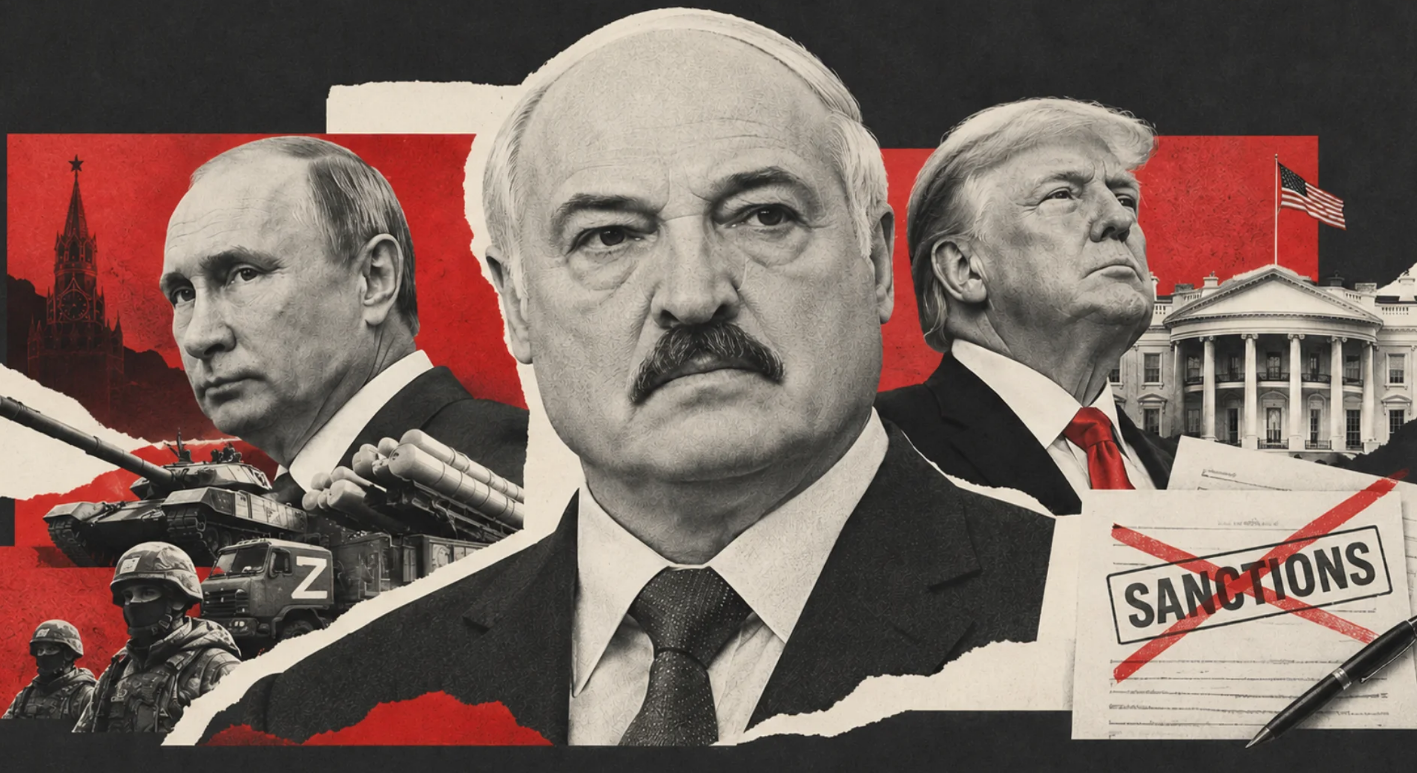
The Belarusian dictator aims to preserve his own power, avoid the direct involvement of the Belarusian army in combat operations, and secure the lifting of Western sanctions.
Minsk is attempting to bargain with the U.S., offering business opportunities to the Americans and seeking ways to return to the international political arena. Pavel Latushka, Chairman of the United Transitional Cabinet of Belarus, explains what concessions Lukashenko hopes to extract from the West, why he fears a scenario involving direct war, and how a shift in the political balance in Washington might affect his plans.
Panic-stricken fear and attempts to avoid being drawn into the war
Alexander Lukashenko, the self-proclaimed president of Belarus, has recently been actively promoting a narrative about the need for urgent peace negotiations. According to Latushka, this rhetoric is driven not by a concern for peace, but by a profound, personal fear.
On November 3, Lukashenko once again proposed an end to hostilities and suggested holding peace talks in Minsk. He also predicted that the war would conclude within the coming months.
The dictator is well aware that if Vladimir Putin fails to achieve his objectives in Ukraine during a winter campaign of strikes against energy infrastructure, the Kremlin might force the Belarusian army to enter the active phase of the war. Lukashenko fully understands the consequences of such a move.
Warnings from the Ukrainian leadership—that military targets within Belarusian territory would be struck in the event of aggression—are taken extremely seriously in Minsk. The fear of physical annihilation drives Lukashenko to raise alarms about the threat of a Third World War, as he attempts to distance himself from responsibility for Russian aggression—even though it was he who provided the territory used for the invasion. A Dictator’s Wish List: What Minsk Hopes to Gain in Negotiations
Lukashenko’s primary objective at present is to secure a seat at the table for any future peace negotiations—at any cost. He does not wish to act merely as a mediator; rather, he openly positions himself as a party with significant stakes in the outcome.
There is a clear set of demands that the dictator intends to push forward should he participate. First, he seeks the preservation of his power and formal recognition as the legitimate president of Belarus. Second, he demands immunity from criminal prosecution—guarantees that he will not face a special tribunal for the crime of aggression, nor be held accountable for the unlawful transfer of Ukrainian children.
Third, he calls for the complete lifting of economic sanctions, with a formal commitment that they will not be reimposed in the future. Furthermore, Minsk intends to demand the withdrawal of NATO forces from the Belarusian border and the exclusion of any references to human rights from any final agreements.
Lukashenko even cynically hopes to profit from the post-war reconstruction of Ukraine, promoting a propaganda narrative that the West will supposedly refuse to assist in rebuilding the country’s devastated infrastructure.
Competing for the Role of Peacemaker and Seeking Legitimacy via the OSCE
Despite Lukashenko’s persistent offers to host negotiations in Minsk, his political weight is negligible. The primary contender to serve as a venue for such talks is Turkey, led by Recep Tayyip Erdoğan—a figure whose international influence is incomparable to that of the Belarusian usurper.
Aware of his own weakness, Lukashenko is exploring every possible avenue to gain legitimacy. It is in this light that one should view the recent visit to Minsk by the Secretary General of the OSCE. Instead of using this visit to exert firm pressure on the regime—for instance, by demanding the release of at least fifty political prisoners as a condition for the meeting itself—the European official effectively played into the dictator’s hands. This allowed Belarusian propaganda to showcase Lukashenko as a figure acceptable for engagement, without him making a single concession—a serious diplomatic failure on the part of the international community.
If the Kremlin issues an ultimatum demanding Lukashenko’s presence at the negotiating table to serve as a second voice for Putin, Ukraine and its Western allies should leverage this situation to resolve the political crisis in Belarus.
Pavel Latushka proposes a clear formula: Lukashenko’s participation in any international forum must be strictly conditional. To secure a seat at the table, the dictator must immediately release all political prisoners, put a complete end to repressions, begin the decriminalization of public and political life, and enter into negotiations with Belarus’s democratic forces regarding the transfer of power.
Only by setting such conditions can Belarus be steered away from Russia’s total sphere of influence and regional security be guaranteed.
The Failure of Negotiations with the U.S. and the Trump Factor
Time is working against the Belarusian regime. Lukashenko’s attempts to secure concessions from the U.S. before the change in administration have effectively failed.
Negotiations regarding the release of political prisoners have been ongoing for nearly two years, yet the regime continues its repressive machinery, detaining new individuals on a daily basis. Now, following Donald Trump’s victory and the Republican takeover of Congress, the window of opportunity for Minsk is narrowing.
It should be noted that, as Latushka previously revealed, Lukashenko has sought the lifting of sanctions not only on the potash industry but also on the Belarusian petrochemical, chemical, banking, and IT sectors. Furthermore, Minsk is interested in resuming the transit of Belarusian fertilizers through the Lithuanian port of Klaipėda—a move that could generate significant revenue for the regime.
Additionally, Lukashenko has proposed that the U.S. participate in various Belarusian business ventures. Specifically, he attempted to interest the Americans in the sale of the airline Belavia and the leasing of Belarusian oil refineries; however, these proposals have yet to yield any results. Minsk is also promoting a trilateral project involving the U.S. and Russia focused on the production of nitrogen fertilizers—an initiative that could potentially pave the way for lifting sanctions on the enterprise Grodno Azot and the Russian company Gazprom.
While there is a risk that the new U.S. administration might alter its approach toward supporting Ukraine, Congress will remain a powerful counterweight. American lawmakers control the federal budget and have the authority to block questionable foreign policy agreements made by the White House, as well as to initiate investigations into corrupt ties. Consequently, it will be extremely difficult for Lukashenko to “sell” the release of hostages on his own terms.
Hybrid Threats and the Absurdity of Russian Propaganda
At the same time, the regime continues to exert hybrid pressure on the European Union. Activity along the borders with Poland and the use of migrants remain tools of intimidation.
The goal of these provocations is to keep European society in a state of constant perceived threat, drive up defense spending, and foster fatigue regarding support for Ukraine. This strategy is synchronized with the absurd narratives pushed by Russian propaganda.
As Latushka points out, Kremlin mouthpieces like Vladimir Solovyov have radically shifted their rhetoric: moving from promises to “take Kyiv in three days” to, instead, frightening Europe with the claim that the Ukrainian army is supposedly going to occupy NATO countries. This “ideology of idiots” is aimed exclusively at Western populists, with the intent of pressuring them to halt funding for the Armed Forces of Ukraine.
Ultimately, however, these actions only confirm that both Moscow and Minsk remain sources of global instability—instability that can only be halted by a unified Western stance and firm ultimatums, rather than through attempts at appeasement.