
In the temporarily occupied territories of the Kherson region, Russians are seizing the homes of local residents convicted of “terrorism”
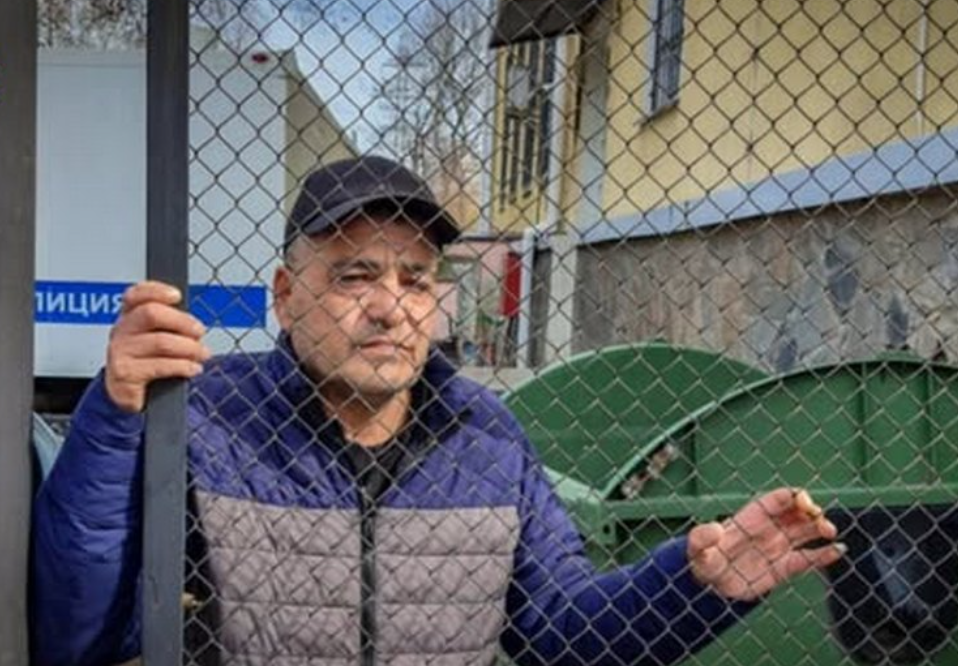
The occupation authorities in the temporarily occupied territories of the Kherson region are seizing the homes of captives—who were convicted on fabricated charges of “terrorism”—and forcing their families out onto the street. Russians are then moved into these properties.
Specifically, such instances have been documented involving political prisoners convicted on trumped-up charges in the so-called “Noman Çelebicihan Battalion case.” According to Zarema Bariieva, a manager at the Crimean Tatar Resource Center, the repressive apparatus in the temporarily occupied territories of Ukraine has gone even further: people are being deprived not only of their freedom but also of a roof over their heads.
Local collaborators are actively assisting the Russians. According to Bariieva, in September, Asan Aliyev—the occupation-appointed head of the settlement of Novooleksiivka in the Henichesk community—arrived with his entourage at the home of political prisoner Rustem Huhuryk and sealed the property. Rustem Huhuryk was detained back in March 2022 and sentenced to 8.5 years in a strict-regime penal colony.
“This man, together with his wife Viktoriia, spent 20 years building and furnishing this house; their three children were born here. The couple worked hard their entire lives, often going without essentials themselves, to build their home and establish their life there.” “The children have been deprived of their father and his care, and now—of a roof over their heads as well,” reported Zarema Barieva.
She notes that the Russians justify their actions by claiming that Rustem Guguryk—who was convicted under a “terrorism” charge—allegedly “has no right to housing or property in Russia.” Yet, the family was never presented with any official court decision or order, even though the house was registered under Ukrainian law and the family holds all the relevant documentation.
Just a few weeks later, a traitor named Aliev—incidentally a former member of the Mejlis of the Crimean Tatar People—decided to move a family of newly arrived FSB officers into the Guguryks’ seized home. Meanwhile, the actual owners were not even permitted to remove any of their belongings—not furniture, not kitchenware, not even the curtains.
Five months ago, the mother of Rustem and his brother, Bekir Guguryk—also a political prisoner sentenced by the Russians to four years in prison in connection with the same “Noman Çelebicihan Battalion case”—passed away. The occupation authorities also seized Bekir Guguryk’s house.
“This is just one of dozens of examples of how the Russians seize people’s property, appropriating what belongs to others and violating not only the law but all standards of human morality,” Barieva emphasized.