
Russia is engaged in a new type of piracy in the Black Sea
The Russian Federation, contrary to the UN Charter and the UN Convention on the Law of the Sea (UNCLOS), is actively blocking ports and maritime trade in order to harm Ukraine’s economy and violate its right to free trade as a sovereign state.
Russian troops looted civilian homes, private businesses, and even cultural institutions during the invasion of Ukraine. Currently, another large-scale theft of Russians is taking place in broad daylight, but already at sea. This is stated in the author’s column of James Gilmore III, US Ambassador to the OSCE, ex-governor of the state of Virginia and current president of the Gilmore Global Group consulting company.
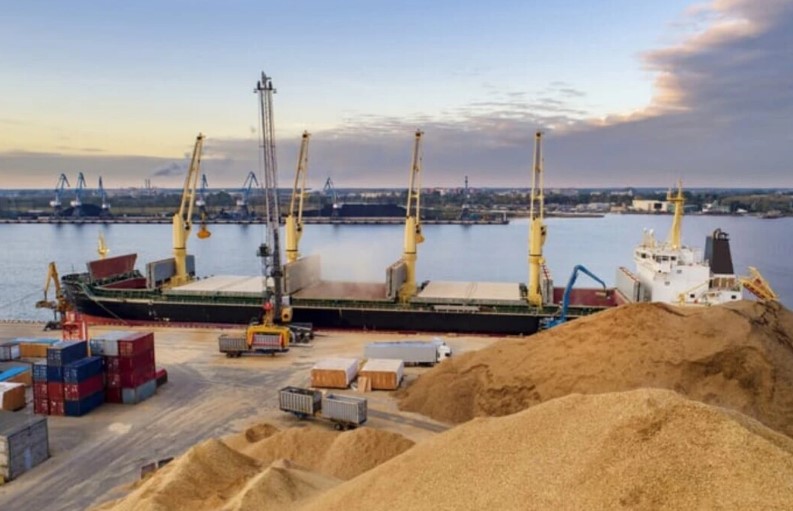
In 2022, an agreement was concluded between Ukraine and Russia with the assistance of Turkey and the UN, which allows the export of grain from Ukraine to world markets through the Black Sea “grain corridor”. The agreement was reached to mitigate a potential global food crisis triggered by the Russian invasion and prolonged instability caused by the COVID-19 pandemic.
Although the agreement was recently extended, the agreed renewal came with a warning from Moscow that any future extensions of the agreement would be dependent on the lifting of Western sanctions against Russia.
The grain agreement is already limited in nature, as it currently only covers grain exports from the three specified Ukrainian ports on the Black Sea. Other Ukrainian goods and raw materials cannot be traded via these sea routes. Ukrainian business was resilient and continued to operate during the war, but was severely limited in its export capabilities due to Russian control of the Black Sea.
Ukrainian vessels destined to export grain are searched and inspected by Russian inspectors as part of the “grain corridor”, but often sabotage the process by leaving their workplaces or demanding extra documents to deliberately cause congestion and delays. It is reported that Russian inspectors have refused to allow ships bound for Ukraine’s main commercial seaport in accordance with the agreement.
In February 2023, the number of ships queuing in the Bosphorus Strait, the main trade route, reached 140 ships. Less than half of the planned inspections in this area are actually carried out every day. This violation of the grain agreement forces Ukraine to export via Eastern European land routes, causing problems in Eastern European agricultural markets. The expected result is to drive a wedge between Ukraine and its European partners.
Before the Russian invasion, more than half of Ukrainian exports went by sea, to which it no longer has safe access. The economic consequences were devastating. Ukraine’s exports fell by a third, causing an estimated 30 percent drop in the country’s GDP. Trade partners of Ukraine are also suffering, as the import of goods has decreased significantly. In 2021, Ukraine imported goods worth $73 billion, and in 2022 – only $55 billion.
In addition, Russian vessels are not subject to such lengthy inspection processes, and this, combined with a significant reduction in the number of Ukrainian naval vessels, frees up more available routes for Russian cargo, funding the Russian economy and military-industrial complex. Russian aggression and delays in grain agreements have significantly affected exports from Russia and Ukraine. Exports of grain and oilseeds from Russia are estimated to grow by 36%, from 33 million tons in 2021-2022 to 45 million tons in 2022-2023. Conversely, Ukrainian wheat exports decreased by 28%, falling by approximately 5.3 million tons.
In short, Russia is actively blocking ports and maritime trade in order to harm Ukraine’s economy and violate its right to free trade as a sovereign state. Russia is using the humanitarian grain agreement as a new form of “piracy” that goes beyond looting Ukraine’s assets and looting its cultural institutions.
This abuse of the grain agreement is essentially a wartime blockade. Russia is establishing control over the “high seas” in violation of international law. This control is a direct threat to other Black Sea countries, especially Georgia.
Currently, Ukraine’s budget is largely subsidized by foreign aid from the EU and the USA. The re-opening of sea ports and ensuring the passage of Ukrainian ships carrying all types of cargo will reduce dependence on foreign economic aid. Russia hopes that Western allies will tire of providing aid as the Russian embargo bleeds Ukraine’s economy.
If free sea navigation is restored, the economic benefits for Ukraine will be significant. According to estimates, Ukraine can potentially generate an additional 20 billion dollars per year. To put this in perspective, the International Monetary Fund (IMF) authorized $15 billion in aid to help Ukraine regain financial stability.
Russia’s actions are a violation of both the UN Charter and the UN Convention on the Law of the Sea (UNCLOS), which state that all countries should have free access to sea lanes. The International Maritime Organization and Western allies of Ukraine should hold Russia accountable for violating the provisions of the UN Convention and call on Russia to unblock Ukraine’s seaports and stop its illegal threat to maritime shipping in the Black Sea.
Restoring Ukraine’s sovereignty in maritime shipping and normalizing the import-export flow is imperative. There is no doubt that financial support for Ukraine must continue, but opening up the Black Sea trade routes for freight on a larger scale will strengthen the immediate protection of Ukraine’s sovereignty and prepare it for a rapid economic recovery after the end of the war.