
Active recruitment of men for the war against Ukraine has begun in Belarus
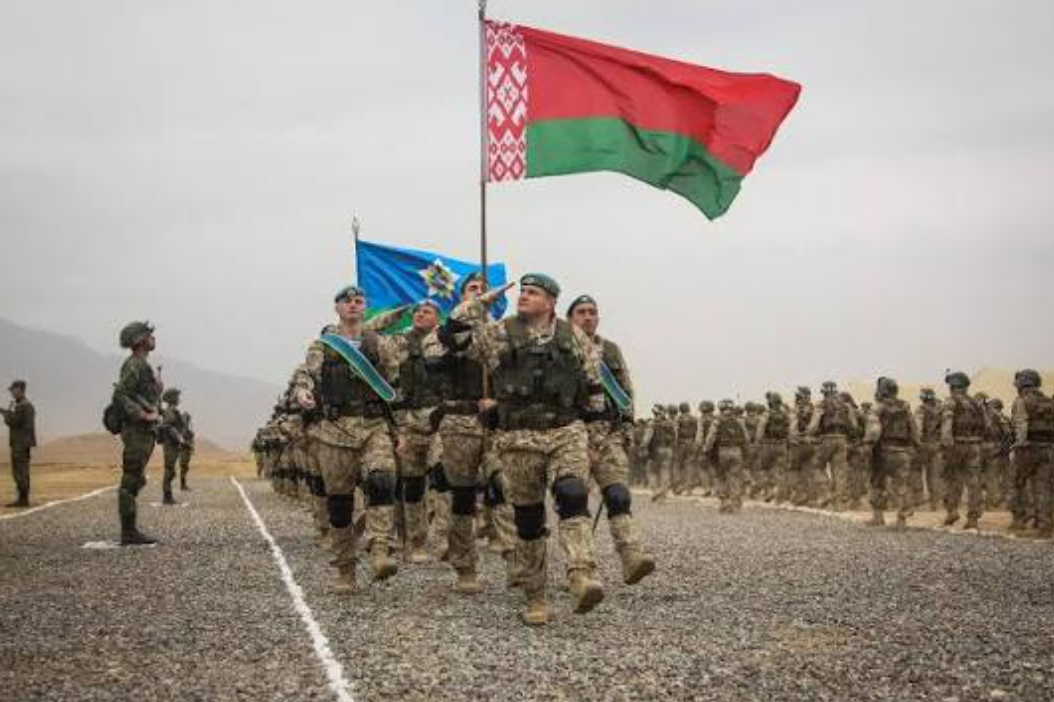
Belarusian mercenaries are being promised sums equivalent to tens of thousands of euros, high salaries, housing, food, military pensions, and life insurance.
Russia has long viewed Belarus as a convenient reserve for replenishing its forces in the war against Ukraine—especially following significant losses on the front lines. Minsk’s economic dependence, the political vulnerability of Alexander Lukashenko’s regime, and the legal ambiguity surrounding the “Union State” create conditions that allow the Kremlin to act with complete freedom. This is reported by Euronews.
In recent months, a large number of advertisements inviting Belarusians to sign a contract with the Russian army have appeared online in Belarus. They are being circulated everywhere: on Telegram channels, in Viber chats, and on the pages of local community groups where people discuss everyday matters.
At times, it appears almost surreal: amidst posts about selling vegetables or looking for a tutor, an offer suddenly pops up promising a “high salary, benefits, and Russian citizenship” in exchange for participating in the war.
Investigations by Deutsche Welle, TVNET, CityDog, and Current Time have documented a sharp increase in the number of such posts. The human rights initiative Belpol regularly publishes examples of advertisements in which recruiters use Belarusian phone numbers to build trust.
On the Belpol Telegram channel, one can find posts promising massive payouts, assistance with loans, the “expungement of criminal records,” and the acquisition of Russian citizenship through a simplified procedure.
On the social network X (formerly Twitter), the account “OSB Belpol” posts screenshots of advertisements offering Belarusians a contract that includes a one-time payment of 4.35 million rubles and the expedited issuance of a Russian passport.
These are not isolated incidents, but rather part of a systematic campaign targeting socially vulnerable individuals.
What recruiters promise
Belarusians are promised sums equivalent to tens of thousands of euros, high salaries, housing, food, a military pension, and life insurance.
Some advertisements even mention “resolving legal issues.” This is particularly dangerous, as participation in an armed conflict abroad falls under the article of the Criminal Code of Belarus concerning mercenarism—an offense punishable by up to seven years in prison. Recruiters insist that this service is “legal,” claiming it does not constitute mercenarism but rather “service in the army of the Union State.”
Who signs the contract? Research indicates that the majority of those recruited are men from small towns and villages—individuals with low incomes who are burdened by debt or legal issues.
Many are unaware of the legal consequences, while others simply seek to earn money quickly, failing to realize that they will be sent to the most dangerous sectors of the front line.
Human rights advocates note that foreign contract soldiers are frequently assigned to assault units, where casualty rates are exceptionally high.
The recruitment scheme is simple yet effective. An individual sees an advertisement on social media and contacts a recruiter using a Belarusian phone number. They are told about payments, benefits, and the alleged “legality” of such service.
Subsequently, they are offered expedited paperwork processing and a trip to Russia—most commonly via Smolensk or Pskov. Upon arrival, the individual signs a contract and becomes a service member of the Russian Armed Forces. From that point on, there is virtually no turning back.
For those who agree to sign a contract, the consequences can be tragic. Beyond the risk of death, they face potential criminal prosecution in Belarus, as well as the possible loss of citizenship or the restriction of their rights.
Societal and State Response
Belarusian society has generally reacted to this with alarm.
People have reported widespread recruitment efforts carried out via spam messages; some have reached out to the Ministry of Internal Affairs, but there has been virtually no response.
The Lukashenko regime does not officially acknowledge the recruitment, yet it takes no action to stop it. Belarus is too dependent on Russian subsidies to openly oppose the Kremlin.
Moreover, mobilization efforts within the country are intensifying, placing additional pressure on men of conscription age.
Recruitment as Part of the Kremlin’s Strategy
The enlistment of Belarusians into the military is neither a matter of random announcements nor a chaotic initiative by isolated individuals. It is a coordinated campaign—part of the Kremlin’s broader strategy—aimed at expanding the pool of human resources for the war against Ukraine.
The legal framework of the “Union State” provides Moscow with additional room for maneuver: formally, citizens of Belarus and Russia possess “equal rights,” and Russian entities seek to interpret this as implying “equal obligations”—including those related to mandatory military service.
Russia is exploiting the vulnerabilities of Belarusian society, its information isolation, and Minsk’s political dependence to transform Belarus into a source of human resources.