
Foreigners in the Russian Armed Forces: how they are deceived into going to war
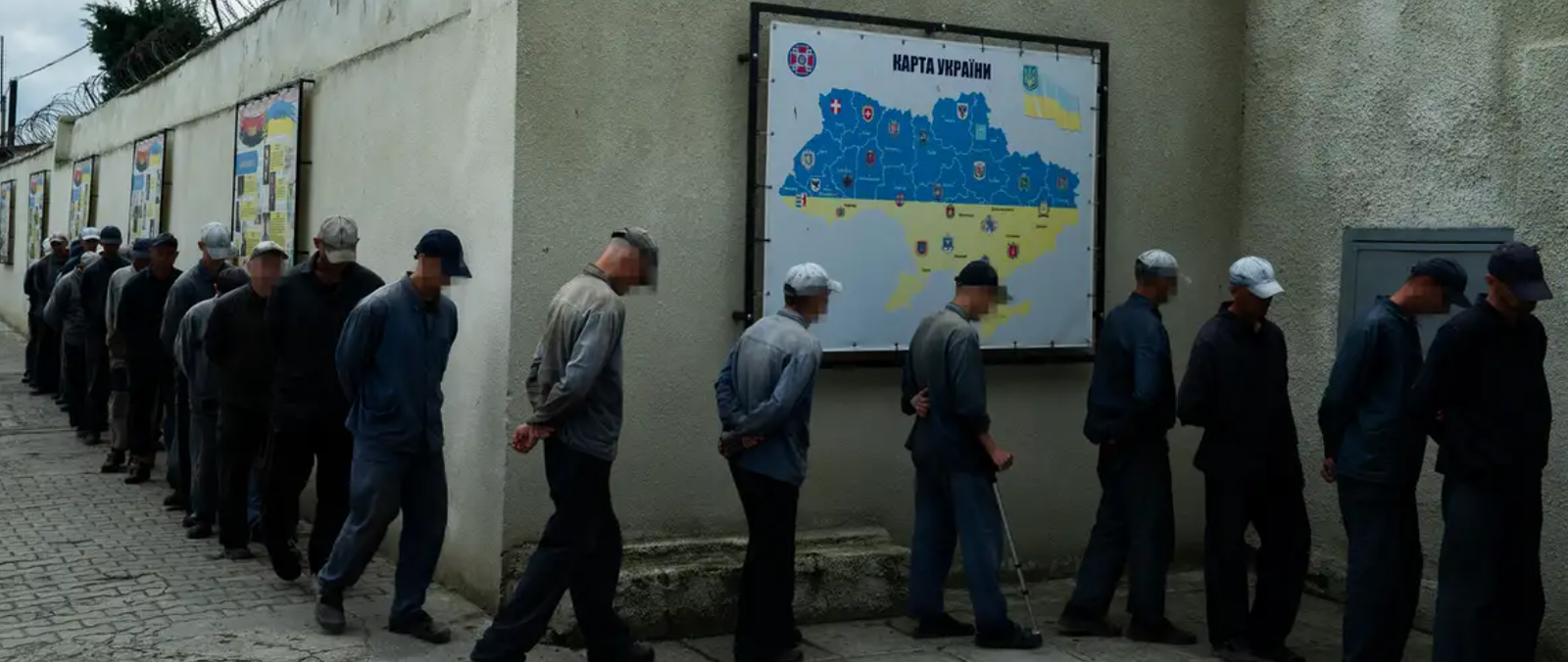
Human rights defenders from Amnesty International spoke with nationals of third countries who fought on Russia’s side and were taken prisoner in Ukraine. Their stories reveal criminal recruitment methods used by the Russian Armed Forces and the scale of the abuses.
In need of soldiers to continue the war against Ukraine, Russia is actively recruiting foreigners into its army through deception, blackmail, violence, and other illegal means. Such actions can often be classified as human trafficking. These are the conclusions reached by Amnesty International (AI) following an investigation conducted since 2024. They presented their report on September 10 during an online press conference.
How many foreigners are fighting for Russia in Ukraine?
Since the start of the full-scale military invasion of Ukraine, Russia has recruited “thousands of foreign nationals from low-income countries, as well as migrants and refugees already living in Russia,” into its army, according to the human rights group’s report, which the editorial team reviewed beforehand.
According to Ukraine’s Coordination Headquarters for the Treatment of Prisoners of War, by the end of April 2026, Kyiv had “identified over 28,000 individuals from 136 countries who had joined the Russian army and were fighting against Ukrainians.” During the September 10 press conference, AI cited more precise figures—also based on official Ukrainian data—indicating approximately 28,300 individuals, excluding soldiers from North Korea. “The Russian army is replenishing its ranks with foreign nationals facing dire economic circumstances and using them as cannon fodder in its war of aggression against Ukraine. The exploitation and coercion have reached such a scale that, in many instances, we are compelled to speak of human trafficking as defined by the UN Palermo Protocols,” states Julia Duchrow, head of Amnesty International Germany.
Accounts from prisoners of war in Ukrainian camps
Between 2024 and 2026, human rights defenders visited two prisoner-of-war camps in Ukraine on six occasions, meeting with fifteen nationals from third countries who had fought on Russia’s side: Cuba, Colombia, Brazil, Egypt, Sierra Leone, Sri Lanka, Somalia, and South Africa. Amnesty International also managed to contact foreign nationals who were likely still serving in the Russian armed forces at the time, as well as their relatives, lawyers, human rights activists, and journalists.
Virtually all the foreign nationals who spoke with human rights defenders in the POW camps recounted abuses they faced during recruitment into the Russian armed forces and their subsequent deployment to the front line. Only three confirmed that they had signed a contract with the understanding that it entailed military service and deployment to a combat zone.
According to the findings, seven of the foreign nationals believed they were being offered civilian jobs in Russia. The remaining six “provided information about their recruitment experience that refutes its voluntary nature,” the AI report states. Testimonies from prisoners of war and other individuals interviewed by human rights defenders mention “contracts signed without informed consent, passport confiscation, restrictions on freedom of movement, inadequate military training, and threats against those attempting to leave the service.” According to the authors, such treatment may indicate that the individuals involved were victims of human trafficking.
Why did foreigners agree to sign the contracts?
When asked whether human rights defenders had managed to learn the reasons behind the decisions of men who knowingly signed contracts, Anna Wright—an AI expert on Eastern Europe and Central Asia and one of the study’s authors—noted that some cited “financial motives” as the primary driver.
Veronika Velch, head of AI in Ukraine, confirmed this. She added that another factor was that people sometimes “felt trapped in their own countries, unable to leave due to visa and financial restrictions”: “So, when the opportunity arose to go to another country [Russia – Ed.], they took it. They would have seized any chance.”
Some were motivated by the prospect of obtaining a Russian passport, “which is still considered prestigious in some parts of the world.” Another group consisted of migrants facing difficulties with residency permits in Russia and access to schooling for their children, the expert noted. Moreover, even those who realized they were being recruited for military service often believed they would perform “support roles”—such as driving—far behind the front lines.
Established migration routes
Pre-existing migration routes were utilized to recruit foreigners into the Russian army, and the treatment they received reflects the abuses migrants in Russia frequently encounter. Consequently, since February 2022, foreigners have found themselves actively involved in combat operations “under conditions that in themselves raise serious human rights concerns,” Amnesty International emphasizes.
Human rights advocates identify two primary ways foreigners entered the Russian army and ultimately ended up at the front. The first scenario involved recruiters approaching potential targets outside Russia—often in their home countries. They frequently lured men with promises of civilian jobs in Russia, such as positions for drivers, cooks, security guards, construction workers, or even IT specialists. Interested candidates were offered high salaries and the prospect of quickly obtaining Russian citizenship. However, upon arriving in Moscow, they were pressured into signing contracts drafted in Russian. Many were then sent to training grounds for a crash course in military training before being deployed to the front lines in Ukraine. One of the Sri Lankan nationals whom the authors met in a prisoner-of-war camp in March 2026—referred to by the pseudonym “Nalin”—recounted how a “friend” from Sri Lanka introduced him to a “recruiter,” a fellow national. According to the man, the job involved working as a security guard at a civilian facility. The recruiter arranged a flight to Moscow for Nalin and 58 other Sri Lankan men.
Upon arrival at the Moscow airport, they were met and taken to another location—likely in the Moscow region—where he was asked to sign a document in Russian. None of the accompanying individuals spoke English or Sinhala (an official language of Sri Lanka). Nalin said he did not understand what was happening. By all indications, the documents he and his compatriots signed included a military service contract. After cursory training—also conducted in Russian—he was sent to the front line in Ukraine.
Promised a job in Poland—sent to the front
“Joseph,” a South African national, experienced an even more unusual turn of events, as recounted to human rights activists by his wife. In late 2025, he applied online for a truck driver position in Poland. He was contacted via WhatsApp by an “employment agent” named “Angelina.” According to the man’s wife, they were surprised that his flight was arranged to Moscow, given that the job advertisement had specified Poland as the place of employment. Angelina said that Joseph was supposed to pick up a truck in Moscow and drive it to Poland—a country she described as “neighboring Russia.”
At the airport, he met another South African national who was traveling to the same “employer.” From that point on—in December 2025—contact with the “agent” was lost. “Upon his arrival in Moscow, all his belongings were taken away… He was told he wouldn’t be going to Poland but would become a soldier instead,” Joseph’s wife recounts. According to her, her husband had no military experience, and the training provided was very poor.
Pressure on migrants in Russia and the threat of deportation
Another method used to recruit foreigners for service in the Russian Armed Forces involves pressuring migrants already in Russia who are facing document issues or financial hardship. Such candidates are often offered a choice: sign a contract—with the prospect of obtaining a Russian passport—or face severe penalties, including deportation from the country.
Refugees constitute another social group vulnerable to illegal recruitment into the Russian army. Amnesty International (AI) cites the story of “Daniel,” a national of an African country who fled persecution at home and was granted temporary asylum in Russia in 2023. He stated that his residency document was not renewed in 2024 because he refused to sign a contract with the Russian Ministry of Defence.
“Russia is doing nothing to put an end to or prevent these practices,” said AI Secretary General Agnès Callamard. “Abuses go uninvestigated, and no measures are taken to identify or protect victims or to hold perpetrators accountable.”
AI unable to visit POW camps in Russia
The report’s authors note that they visited prisoner-of-war camps in Ukraine with the permission of the Ukrainian authorities. Human rights defenders also requested permission from Moscow to visit POW camps within Russia, but received no response to the request. Consequently, AI was unable to speak with foreign nationals who had fought in the ranks of the Armed Forces of Ukraine (AFU) and been taken prisoner by Russia, nor could it verify reports of abuse against them circulated by Russian state media.
Human rights defenders received no reports from third-country nationals serving in the AFU—or their families—indicating violations that could be classified as human trafficking. However, they did reach out to foreign nationals serving in the AFU, who “expressed concern regarding a number of issues.” These included repeated instances of administrative infractions and alleged corruption affecting the rights of service members and their conditions of service. One case involved actions by a unit commander—himself a third-country national—that could be considered ethnic discrimination. Nevertheless, AI assesses that such incidents are not widespread within the AFU.
Call to end illegal recruitment
The authors of the report conclude that the devastating impact of the war of aggression waged by Russia against its neighbor has extended beyond Ukraine, affecting vulnerable individuals and entire communities worldwide. “When I first visited a prisoner-of-war camp in Ukraine, I did not expect to see so many men there who had initially only wanted to support their families and communities,” says Anna Wright. Human rights defenders call for an immediate end to illegal recruitment methods for the Russian army and associated abuses, for those responsible—whether private recruiters, intermediaries, state officials, or army commanders—to be held accountable, and for compensation to be paid to the victims.
Amnesty International Secretary General Agnès Callamard holds Russia directly responsible for the ongoing abuses. First, the Russian state benefits from the recruiters’ activities as the ranks of the Russian Armed Forces are replenished with new soldiers. Second, Russian authorities cannot be unaware of what is happening; at the very least, victims come into contact with Russian Ministry of Defense representatives at training grounds—prior to being deployed to the front—and inform them that they signed their contracts against their will.
She also describes the forced deployment of such “soldiers” to the front as a crime against humanity. The prisoners of war interviewed by Amnesty International in Ukrainian camps “were not simply captured at the front.” “They went through hell, enduring all the horrors of war—killings, constant fear, and demoralization at the hands of Russian commanders,” the human rights defender states.
Source: https://www.dw.com/uk/inozemci-u-zs-rf-ak-ih-obmanom-vidpravlaut-na-vijnu-z-ukrainou/a-79215029