
From Dnipro to Kharkiv, not a single gas station remains intact
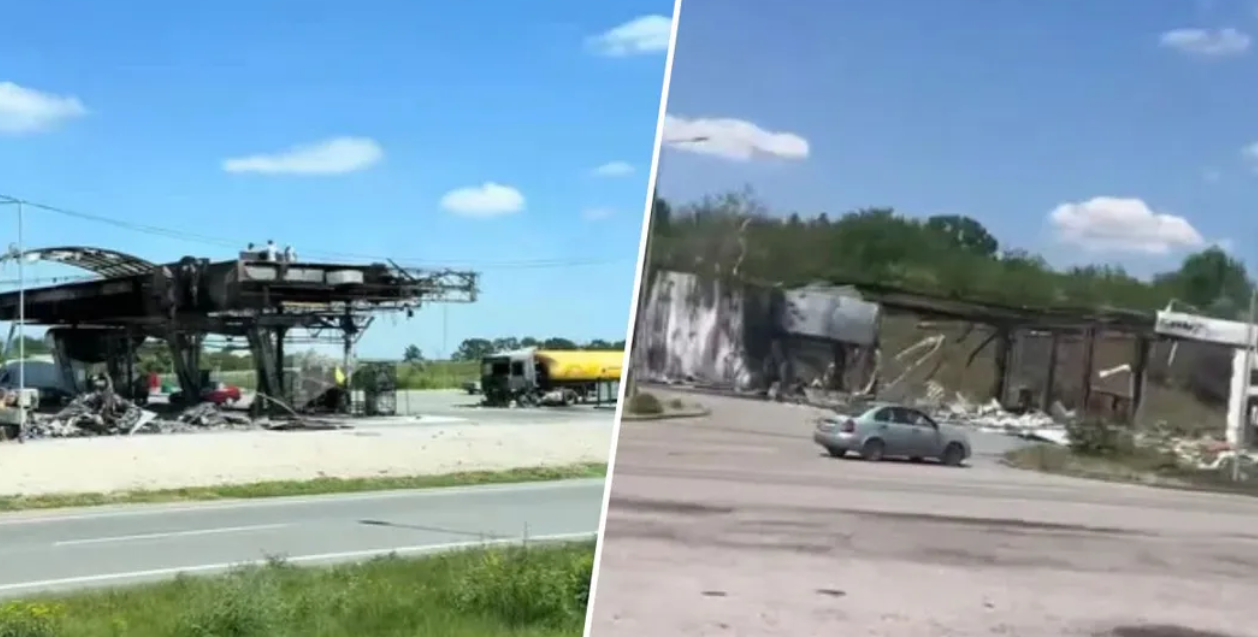
There is not a single working gas station left on the route between Dnipro and Kharkiv – this is evidenced by videos and posts that drivers are massively publishing on social networks. Previously, experts warned that Russia was planning a massive attack on the gas station network throughout Ukraine. The situation on the M-18/M-29 route was a clear confirmation of these warnings.
Videos of the route between the two cities went viral on social networks and became the basis for mass discussion. Footage of destroyed gas stations on the road from Dnipro to Kharkiv appeared in public places. In one of the videos, the driver notes that he did not come across a single working gas station on this route.
The Dnipro-Kharkiv route is one of the most important logistical corridors in eastern Ukraine, along which hundreds of vehicles ply every day: from volunteer vans to trucks with humanitarian aid. The complete absence of working gas stations on the route means that drivers will have to travel more than 200 kilometers without the opportunity to refuel. The problem is especially acute for those traveling from Kharkiv to the Dnieper, because in Kharkiv itself the fuel situation also remains tense due to constant shelling of infrastructure.
Starting from June 26, the Russian military has been attacking gas stations in Kharkiv and the region every day. During this time, more than 20 gas stations have been hit, according to the head of the regional military administration, Oleg Synegubov. Due to regular attacks, the WOG gas station network changed its operating mode from July 1.
Head of the Main Directorate of the National Police in the Kharkiv region, Petro Tokar, emphasized that since the beginning of 2026, 89 attacks on gas stations have been recorded in the Kharkiv region – both operating and non-operating. The greatest intensification of such attacks began on May 1. Of the 89 attacks on gas stations, 62 were carried out after May 1, 2026.
Civilian gas stations do not provide military fuel supplies and are not critically important for the functioning of the Defense Forces. Strikes on such facilities are aimed primarily at creating additional pressure on the civilian population and disrupting the usual operation of infrastructure in front-line communities.
After large-scale attacks on Kyiv, the Russian army significantly intensified strikes on front-line and border regions. The Sumy, Kharkiv, Dnipropetrovsk and Zaporizhzhia regions are suffering the most, where guided aerial bombs and strike drones are used almost continuously. At the same time, Beskrestnov stressed that despite the destruction of individual facilities, a fuel shortage for the population is not expected.
Among the options currently being discussed by representatives of fuel companies is the use of mobile gas stations in front-line regions, but their use is currently limited by law.
Russia’s strikes on Ukrainian gas stations are a deliberate decision aimed at the maximum destruction of fuel infrastructure, as evidenced by the wide geography of such strikes – large cities, border areas. In the Kharkiv region, 42 gas stations were attacked in the first four months of 2026. After successful strikes by Ukrainian forces on Russian logistics, the enemy decided to focus on destroying civilian fuel infrastructure. The Kharkiv region has been suffering from massive drone attacks throughout the full-scale invasion. In Bogodukhov, a strike drone hit a food industry enterprise – four workers were injured as a result of the attack, and production facilities were destroyed.