
How Hungarian Prime Minister Orban became Putin’s key EU partner
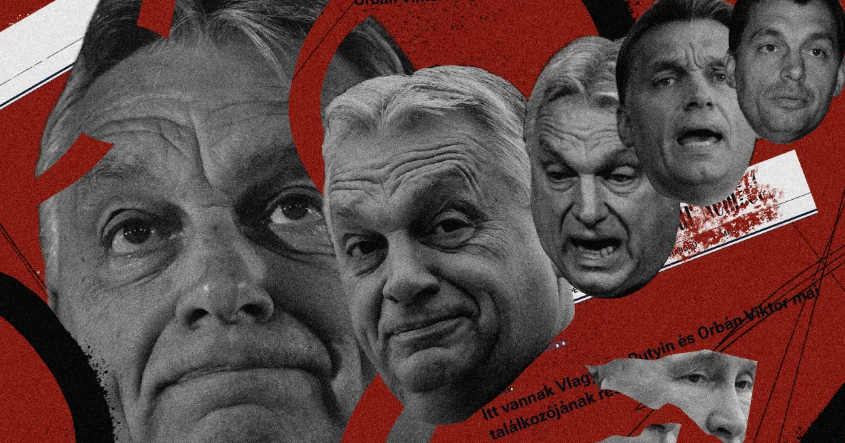
Hungarian Prime Minister Viktor Orban has gone from a liberal politician who called for the withdrawal of Soviet troops to one of the Kremlin’s closest partners in the EU. His political transformation has been gradual and accompanied by a change in ideology and foreign policy.
Politico writes about this.
https://www.politico.eu/article/viktor-orban-vladimir-putin-eu-hungary-russia/
In 1989, during the reburial of Prime Minister Imre Nagy, who led the 1956 Hungarian uprising, Orban publicly called for the withdrawal of Soviet troops from Hungary. He declared that the country was capable of ending the communist dictatorship and achieving free elections.
In the early 1990s, Orbán was one of the leaders of the Fidesz party, which at the time united anti-communist students and intellectuals. In 1990, he led the party and gradually established full control over it. In 1994, Fidesz changed its ideology from liberal to national-conservative, after which some members left the political force.
After his first term as prime minister in the late 1990s, Orbán spent eight years in opposition. During this period, he tried to block the work of parliament and oppose the government of the day.
Returning to power in 2010, Orbán initiated changes to the constitution and legislation that weakened the system of checks and balances, affected the independence of the judiciary and the media, and changed electoral rules.
The turn towards rapprochement with Russia occurred gradually. In 2014, Orbán signed a loan agreement with the Kremlin to expand the Paks II nuclear power plant. He later declared his intention to build an “illiberal state” in Hungary, citing Russia as an example.
In the following years, the Hungarian government developed a policy of “opening to the East,” in particular by strengthening relations with Russia, China, and Turkey.
Against the backdrop of Russia’s full-scale war against Ukraine, the Hungarian prime minister became one of Russian dictator Vladimir Putin’s key partners in Europe. In particular, on the eve of the Hungarian elections, he blocked a €90 billion EU financial aid package for Ukraine.
The Hungarian foreign minister also explained the transfer of confidential information to the Kremlin through unofficial channels.
At the same time, Orbán regularly criticizes EU policy and positions Hungary as a state under pressure from external forces. In his statements, he compares the influence of Brussels with the previous influence of Moscow.
Analysts associate Orban’s political transformation with the desire for power and the changing political situation. In particular, he focused on conservative forces, which provided more opportunities for increased control and electoral support.