
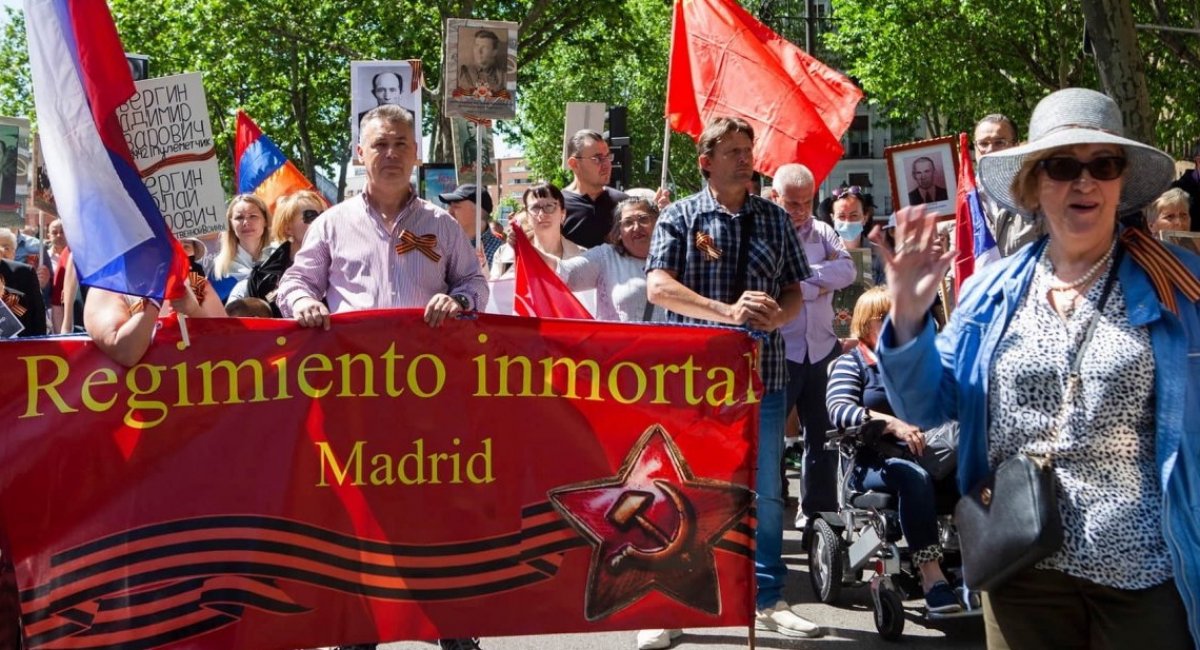
The Immortal Regiment march, which once emerged as a private act of remembrance, has long been completely absorbed by the russian state. What takes place today under the Immortal Regiment banner on the streets of Europe is a carefully planned, coordinated political operation serving the Kremlin’s strategic objectives — not the family ritual it once was.
Coordination of the marches across Europe is carried out through russian embassies, “russian Houses,” the russian Military Historical Society, and the Victory Volunteers movement. These are not independent civil society organizations — they are elements of russia’s soft power infrastructure, receiving directives and funding through channels that ultimately lead directly to the russian state. The appearance of grassroots spontaneity is deliberate and carefully constructed.
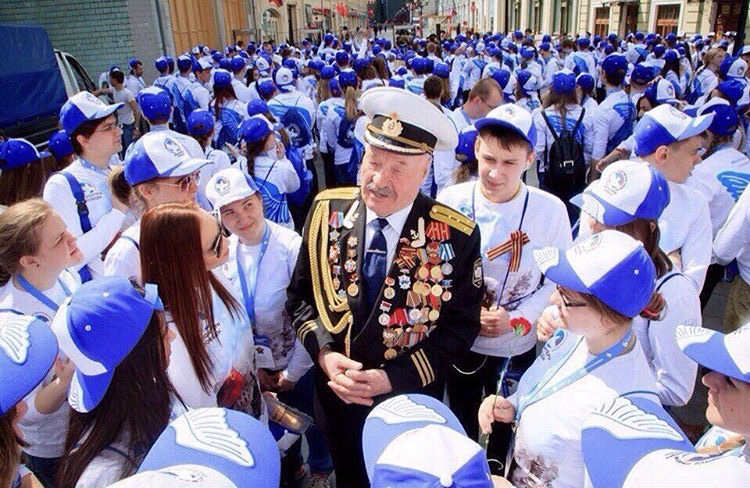
The marches carry a layered message. On the surface: commemoration of Second World War victims. One level deeper: the assertion that russia alone liberated Europe from Nazism and therefore occupies a unique moral position. At the core: the claim that this moral position justifies russia’s current military aggression against Ukraine, rebranded as “denazification.” Portraits of Stalin appear alongside Soviet flags; slogans of “We Can Do It Again” — a direct reference to military conquest — ring out on European streets. This is not remembrance. It is a rehearsal for a new war.
Alongside the marches, russian state structures have built a parallel online infrastructure for memory politics. The portal “Mesto Pamyati” (mestopamyati.rf) presents itself as a map of war memorial sites around the world. In reality, its co-organizers include the russian Military Historical Society, russia’s Foreign Ministry, and the Victory Volunteers movement.
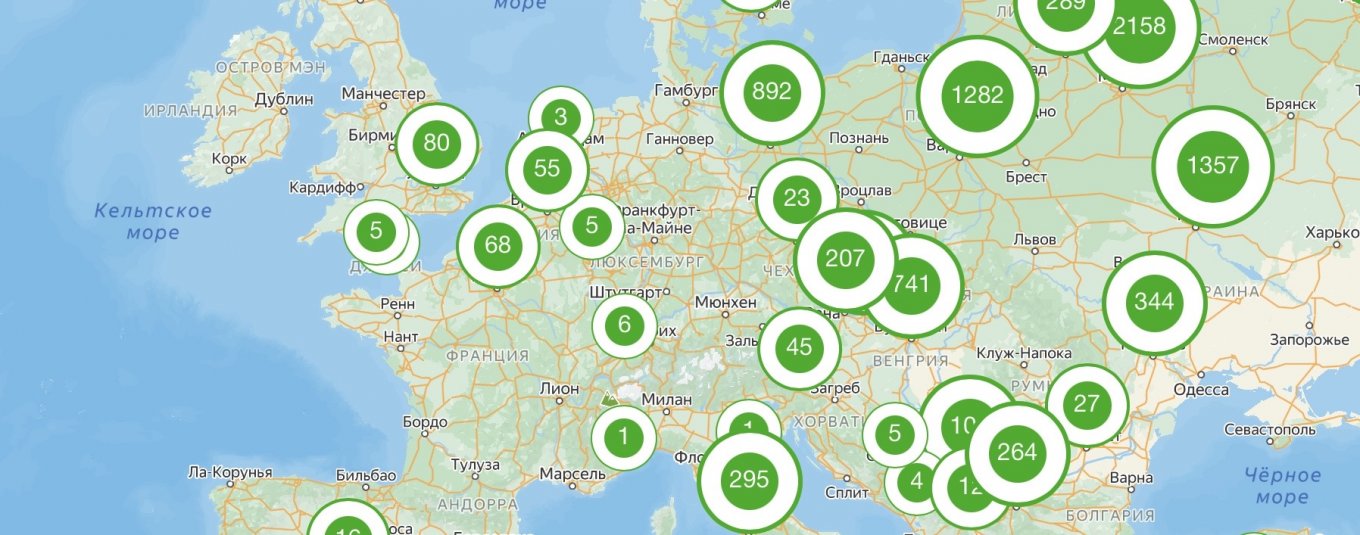
What appears outwardly to be a heritage preservation platform is in fact a centralized registry of “russian” memorial sites abroad — anchor points for regular diaspora mobilization events, contacts with local authorities, and diplomatic pressure against the removal of Soviet monuments in Eastern Europe. The portal determines which sites are russian, how they should be described — and which inconvenient histories are absent from the map: repressions, occupations, war crimes.
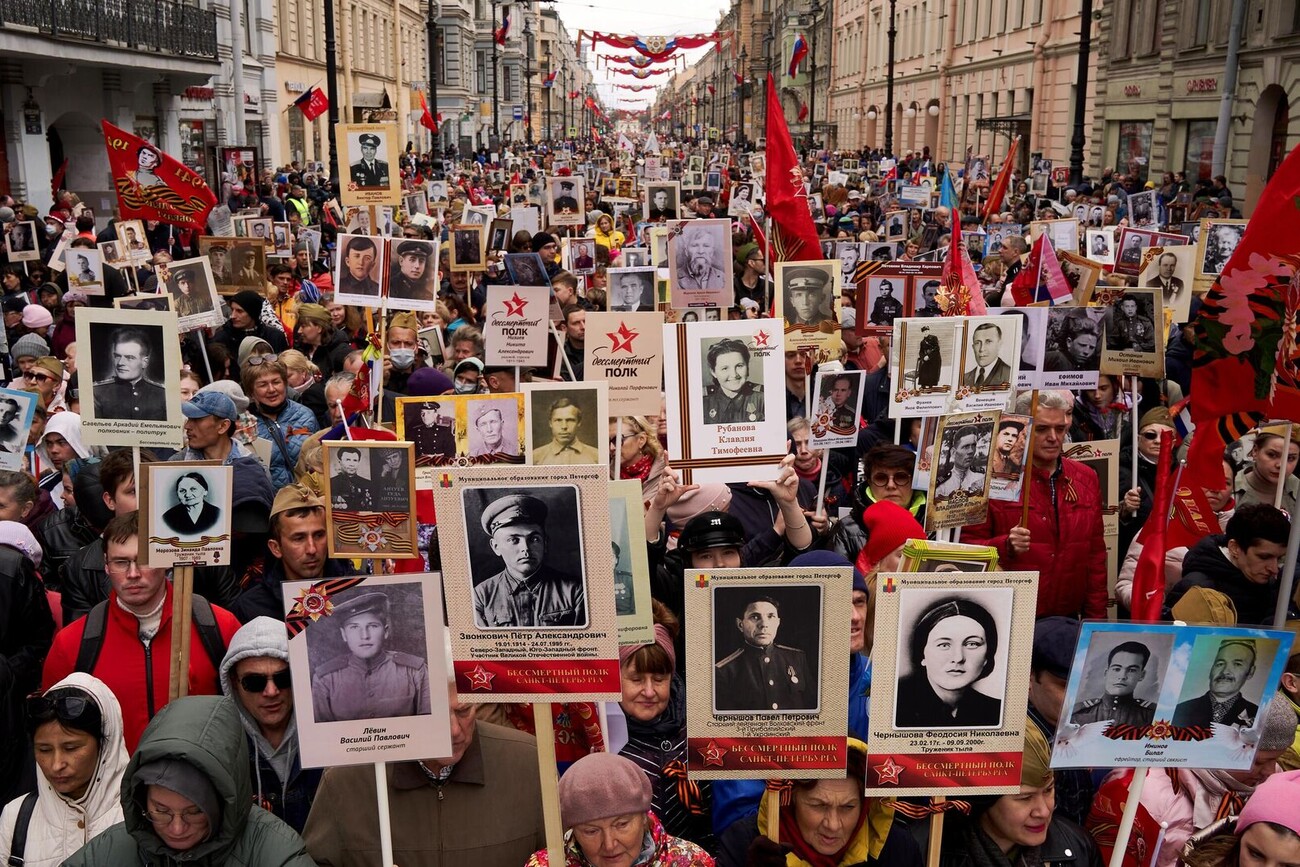
This year, Kremlin strategists have once again sent their Immortal Regiment on a military campaign against Europeans. This is a genuinely wide-scale, calculated, and long-planned act of aggression against European unity — targeting the minds and hearts of citizens across the continent. It is the same instrument used against Ukrainians before russia launched first its hybrid and then its full-scale military aggression. Europeans should remember that marching behind the Immortal Regiment always come the regiments of they’re not there — armed green men without insignia, followed by the armed hordes whom russia’s “Victory cult” has reprogrammed for violence and killing in the name of the past. This must be stopped in time — at the stage of the so-called Immortal Regiment march itself.
Genuine remembrance of those who died in the Second World War requires no Soviet symbols, no portraits of dictators, no slogans about new conquests. The memory of that war belongs to all the peoples who suffered and fought: Ukrainians, Poles, Jews, French, and many others. No one holds a monopoly on that memory — and no state has the right to turn it into a weapon against the living. True respect for the fallen means one thing: doing everything possible to ensure such crimes are never repeated — not justifying new killings by invoking a victory from eighty years ago.