
Humanitarian catastrophe in Kherson region
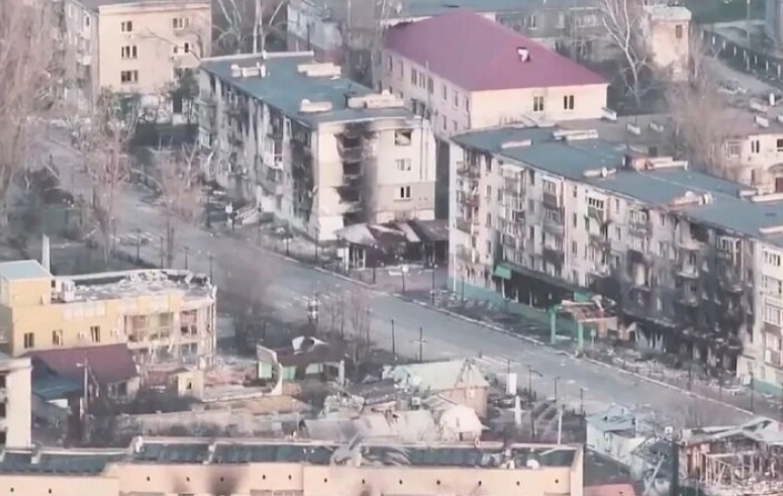
An entire town in Kherson region has been taken hostage — residents of Oleshko cannot leave the territory occupied by Russia.
Only four kilometers separate Kherson and Oleshko — and yet there is a whole abyss between them. Kherson is in Ukraine, Oleshko is in territory occupied by Russia. Of the 25 thousand people in the town, only about three thousand remain. And they cannot leave! Leaving Oleshko is prohibited, as Russian troops are using the residents as human shields against the Ukrainian army.
Russian soldiers attack Kherson every day. They launch drones from residential buildings, police stations and schools. If the Ukrainian Armed Forces return fire, they risk hitting Ukrainian hostages. “The Russians are blocking all access roads, so no one can leave or enter,” says Oleksandr Tolokonnikov, a representative of the Kherson region military administration.
Zarina Zabriskie, an American journalist living in Kherson, managed to contact people in the occupied city. Mykola and Tetyana, both in their 60s, told her about the terrible situation there.
“Our neighbors were killed in December when they tried to escape. Their car hit a mine,” says Mykola.
“It’s hell. Pure horror. There’s nothing. People are living off the last supplies from their basements and pantries. Some are catching pigeons and cooking them. Even the Russian military has almost no food. Sometimes drones deliver plastic bags with a few things. Russian soldiers break into basements, steal whatever they find, and then say, ‘Ukrainian pickles are delicious,’” says Tetyana.
If sometimes a car does pass through mined roads and Russian checkpoints and brings flour or sausage, there are already 400-500 people lined up outside the hospital in the morning. Children are begging for food.
Journalist Zabriskie speaks about the humanitarian catastrophe: “A virtually unnoticed humanitarian catastrophe is currently unfolding in the Russian-occupied south of Ukraine — in the Kherson region, especially in Oleshki and on the left bank of the Kherson region. There, civilians are under a kind of siege by drones, without food, water, electricity or communications, and at the same time they are subjected to coercion, intimidation and deprivation of property.”
Zarina hopes that the fate of Oleshki and other occupied territories will receive more attention. According to her, refugees from there speak of “an almost unnoticed genocide.”