
In a month, Russian forces attacked 28 civilian vessels in the Odesa region, 21 people died
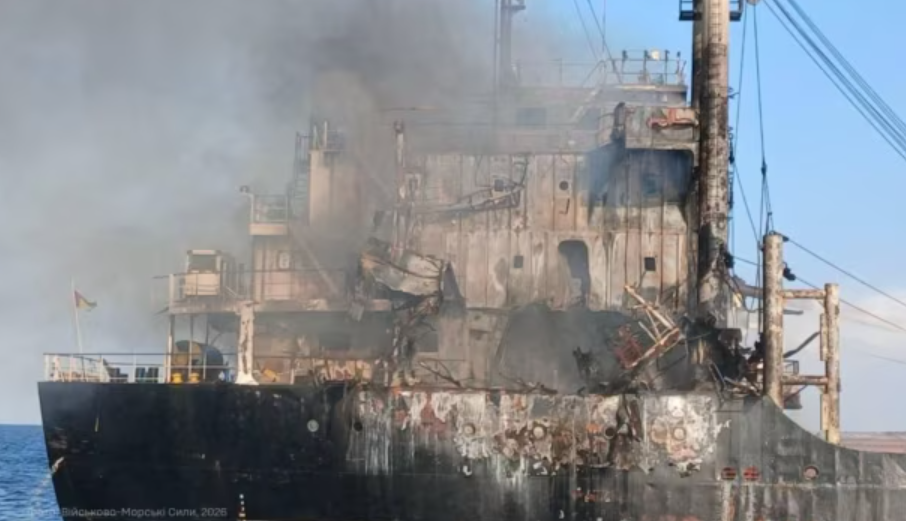
In the past month, from June 20 to July 20, the Russian army attacked 28 civilian merchant vessels in the ports of “Great (Velykа) Odesa”.
All of these are peaceful civilian vessels, two Ukrainian and 26 foreign. They mainly used attack drones. However, in recent days, the use of missiles has increased. In total, 21 people were killed and 34 were injured.
The last incident with the highest number of deaths occurred on July 19. Then the Russian military launched a missile strike on the merchant ship Golden Leo in the Black Sea off the coast of Odesa, which was sailing under the flag of Guinea-Bissau. The ship was leaving the Odesa port with a cargo of corn. One of the missiles hit the starboard side of the superstructure, causing a fire on the ship.
There were 17 crew members on board, consisting of citizens of Syria and India, as well as a Ukrainian pilot. As a result of the strike, 10 people died – nine crew members and the pilot. The surviving sailors were evacuated to Odesa.
Responding to a Russian diplomat’s summons to the Indian Foreign Ministry after the strike, Russian President Vladimir Putin’s spokesman Dmitry Peskov said that “the Russian armed forces are striking and will continue to strike those vessels that are involved in the transportation of ammunition, weapons, etc. for the purposes of the Kiev regime.” Lloyd’s List, one of the most authoritative sources in global shipping, in a July 16, 2026, article indicates that after the latest Russian attacks, shipowners are increasingly refusing to enter Ukrainian Black Sea ports, that working conditions have become the worst since the termination of the “grain deal” in 2023, that freight rates, insurance costs and the total cost of logistics are increasing – the number of available vessels is decreasing, although the ports continue to operate.