
Іn Crimea, a Russian court has sentenced a local resident to 15 years in a penal colony for allegedly passing information about Russian air defense systems to Ukraine
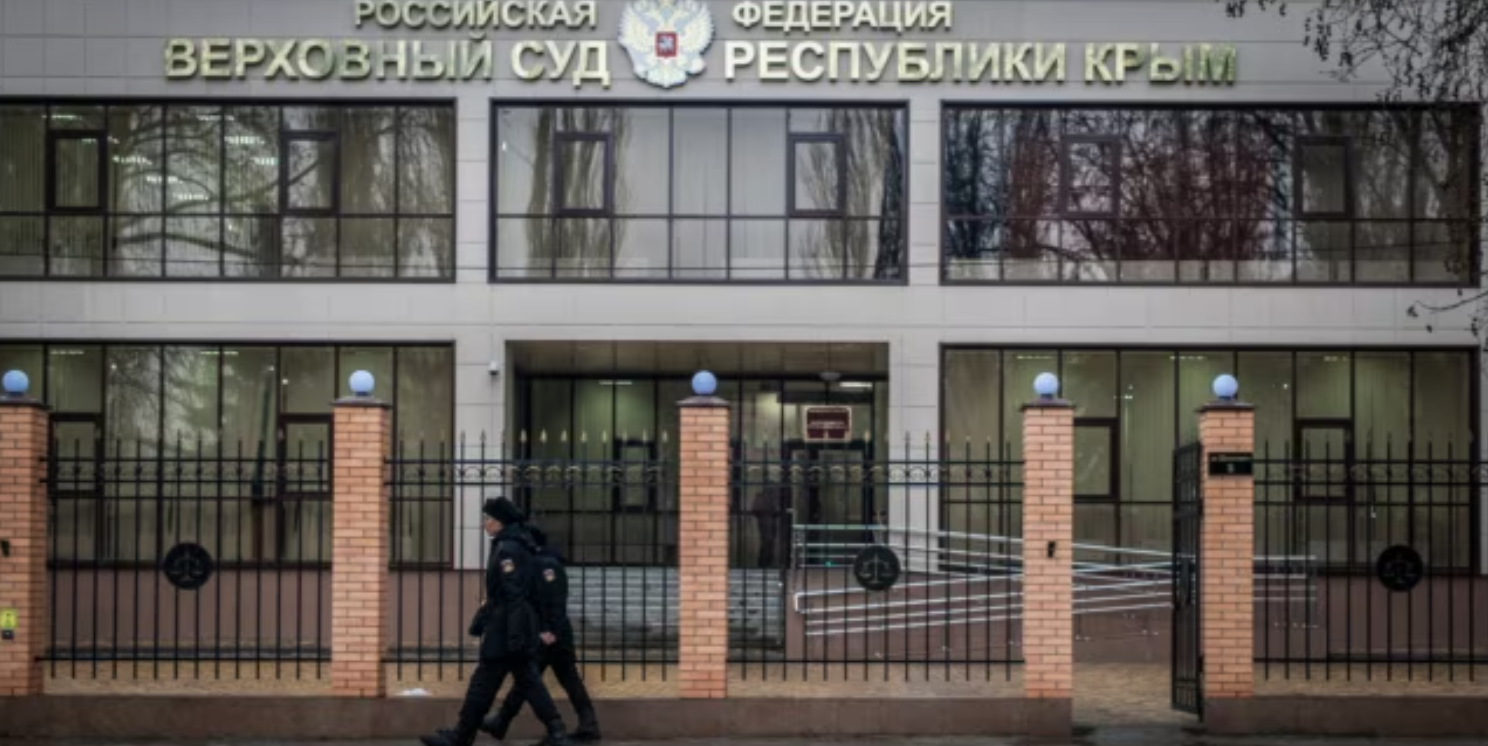
The Russian-controlled Supreme Court of Crimea sentenced a 51-year-old resident of the Krasnoperekopsk District to 15 years in a maximum-security penal colony on charges of “high treason” (Article 275 of the Criminal Code of the Russian Federation). This was reported on October 28 by Russian media, citing the court’s press service.
According to the Russian prosecution, the man—described as an “opponent of the ‘special military operation'” (the term used in Russia for the war against Ukraine)—allegedly gathered information in September 2025 regarding the deployment locations of Russian air defense systems in Crimea.
The Russian-established prosecutor’s office in Crimea claims that the man personally marked the positions of Russian air defense systems on an interactive map and subsequently transmitted this information via a messaging app to a public channel—a channel that Russian security services allege is used by the Security Service of Ukraine (SBU). Given the ongoing war, it is difficult to independently verify these claims made by Russian security authorities.
In addition to the 15-year maximum-security prison sentence, the man was also handed a one-and-a-half-year term of “restricted freedom” to be served following his release. The case was heard in a closed session, as Russian authorities assert that the case materials contain state secrets. The verdict has not yet entered into legal force.
The man’s name has not been disclosed. According to human rights activists in Crimea, the individual in question is a farmer named Vladimir Stoyan. Human rights defenders report that he was abducted by FSB officers in the autumn of 2025, held incommunicado for at least six months at Pre-trial Detention Center No. 2 (SIZO-2) in Simferopol, and subjected to beatings. Previously, the Russian FSB alleged that the man had collaborated with the Main Directorate of Intelligence of the Ministry of Defence of Ukraine, providing the Ukrainian side with photographs, video recordings, and the coordinates of a Russian S-400 anti-aircraft missile system.
There have been no public comments from the convicted man or his defense team regarding the verdict.
In early October, it was reported that the Russian-established prosecutor’s office in Crimea had sent a case to court involving a resident of the Krasnoperekopsk District, who was accused of collaborating with Ukrainian intelligence services.
Human rights defenders have reported that, since the beginning of 2016, at least 28 convictions have been recorded in annexed Crimea in cases involving “high treason,” “terrorism,” and the handling of explosives.
In Russia and the territories it occupies, security forces target residents who hold pro-Ukrainian views. Alexander Talipov, a pro-Russian blogger from Crimea, publishes the personal information of Crimeans who support Ukraine on his Telegram channel. Following such reports, these individuals are often detained and face administrative or criminal charges for “discrediting” the Russian army.
Human rights advocates predict that the number of cases initiated by Russian security forces in Crimea—covering charges such as high treason, collaboration with Ukraine, espionage, and sabotage—will continue to rise. Currently, the FSB initiates such cases almost daily, whereas prior to 2014, there were no more than 10 such cases per year.