
In the schools of the Genichesk district, a pro-Russian children’s movement under the supervision of collaborators is holding ideological “actions”
In the occupied Genichesk district, an artificially created pro-Russian youth movement “Movement of the Firsts” has intensified its activities in schools. Under the control of teachers-collaborators and curators associated with the military structures of the Russian Federation, teenagers are involved in so-called all-Russian actions that have signs of systemic ideological indoctrination.
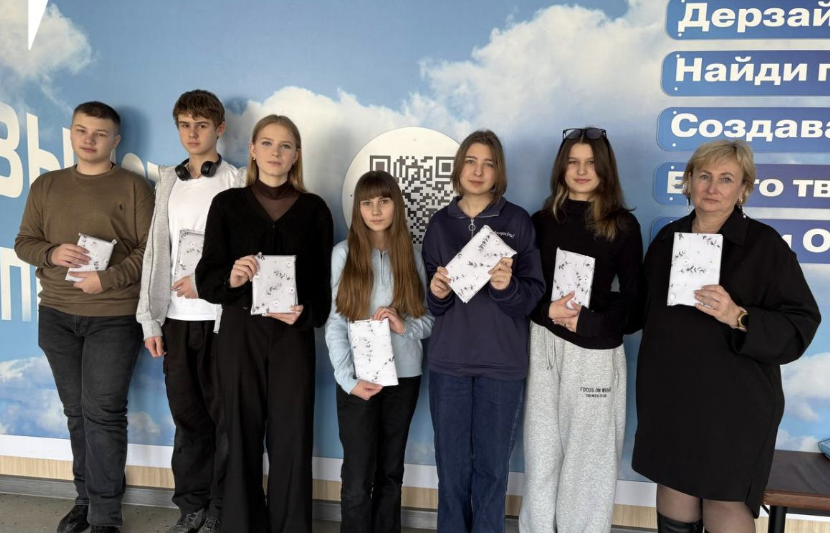
Pro-Russian media reported on another event. This is a “book exchange” called “What does the cover hide?” held at Genichesk school No. 3, which was formally timed to coincide with the International Book Giving Day. The event was organized by representatives of the “Movement of the First” with the participation of the head of the center in a structure controlled by the Russian Federation.
According to the official version, schoolchildren were offered to choose a book wrapped in paper without indicating the author and title in order to “avoid prejudice”. The event was joined by members of the so-called movement council and the advisor to the director for educational work, a person who cooperates with the pro-Russian administration.
Despite the external neutrality of the format, such “cultural” initiatives are part of a broader strategy to integrate the educational environment of the Genichesk district into the Russian ideological space. “Movement of the First” was created with the support of the Russian Federation leadership and operates under the supervision of federal structures, in particular those related to youth policy and the power bloc.
In the occupied part of the Kherson region, the movement’s centers operate in schools and after-school institutions. The events are organized under the supervision of teachers who have agreed to work according to Russian standards, as well as representatives of structures that coordinate youth activities in cooperation with the military units of the Russian Federation.
Regular holding of “all-Russian actions”, thematic lessons and public events using the state symbols of the Russian Federation is aimed at forming loyalty to the occupying country from childhood. Thus, even events positioned as popularizing reading or developing culture become an instrument of political influence.
The activation of pro-Kremlin youth structures in the Genichesk district indicates the systematic work of the pro-Russian authorities to reformat the educational space and involve children in ideological programs controlled by the Russian Federation.