
Orban used disinformation in his election campaign
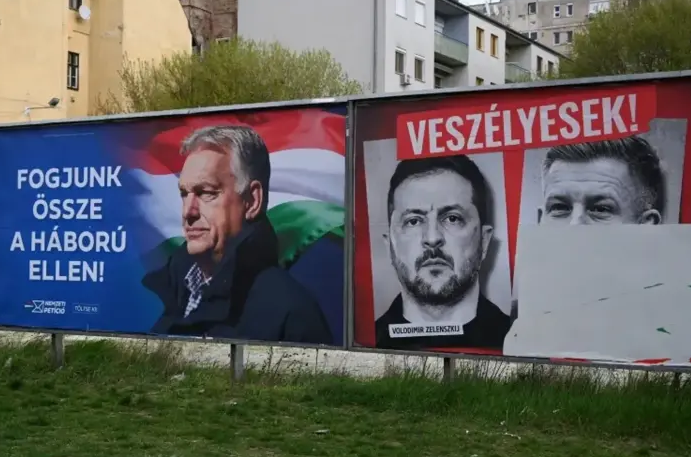
Hungarian Prime Minister spreads fake news about Ukraine to stay in power. Analysts record Russian interference and use of artificial intelligence in Orban’s election campaign, AFP reports.
Hungarian Prime Minister Viktor Orban has used disinformation to make Ukraine a scapegoat in his election campaign, analysts say, and some suggest he is receiving covert help from Russia in fighting an unprecedented challenge to his 16-year rule.
The Hungarian prime minister, Moscow’s closest ally in the European Union, has used images created with artificial intelligence to stoke negative sentiment against Ukraine, which is battling a Russian invasion.
Analysts say Russia is helping him shift the focus of the debate away from the pressing issues that have propelled opposition leader Peter Magyar’s party to the top of opinion polls ahead of Hungary’s April 12 election.
“The campaign rhetoric is deliberately binary — peace versus war — portraying Ukraine as a threat and the current Hungarian government as seeking stability and rationality,” said Chilla Fedynets, a historian at the Center for Social Sciences at ELTE University.
The two neighbors have been at loggerheads since Orban accused Ukraine of delaying the reopening of a pipeline that carries Russian oil to landlocked Hungary, which Kyiv says was damaged by Russian airstrikes in January.
Hungary, a member of the European Union, is also delaying a 90 billion euro ($103 billion) EU loan to war-torn Ukraine and a new round of sanctions against Russia over its invasion.
In March, Hungarian counterterrorism forces detained employees of a Ukrainian bank, seizing valuables across the country.
Tabloids affiliated with Orban’s Fidesz party published artificial intelligence-generated photos that exaggerated the amount of cash and gold.
Posts with the images generated unusually high activity on Facebook, with many of the accounts having non-Hungarian names and no public information or profile photos — typical signs of fake profiles used in coordinated bot campaigns.
A few weeks earlier, fake images began circulating online purporting to show a Hungarian memorial in Transcarpathia — home to Ukraine’s ethnic Hungarian minority — defaced with anti-Hungarian and anti-Orban slogans, as well as Ukrainian nationalist symbols and a swastika.
Although the monument has been vandalized before, the images were revealed to have been created using artificial intelligence.
Nevertheless, their publication prompted some social media users to demand retaliatory measures.
Experts say there is also evidence of ongoing Russian efforts to influence Hungarian voters ahead of the election, including through deepfakes and disinformation presented as genuine news reports.
“There is a constant disinformation campaign aimed at influencing the elections in Hungary, as was the case in the elections in Moldova and Romania,” Ferenc Fres, the former head of Hungary’s cyber security agency, told AFP.
He said the messages spread by Russian groups were “basically identical to Hungarian pro-government propaganda, so they mutually reinforce each other”, adding that he found the lack of declassified official statements on the matter “problematic”.
However, Hungarian Foreign Minister Pеter Szijjаrtо and other representatives of the ruling party have called the claims of Russian interference “fake news”.
For his part, Orban has sought to portray his main rival as a “puppet” of the EU and Ukraine.
“We have to choose who will form the government – me or (Ukrainian President Volodymyr) Zelenskyі,” Orban said at a rally in Budapest in mid-March.
A few hours later, a large Ukrainian flag was unfurled at an opposition march, and photos of the incidents quickly spread on social media among government politicians and pro-government media.
But a day later, it emerged that the people holding the flag were linked to the youth wing of Orban’s party.
“We said there would be false flag operations, but that’s not what we meant,” Magyar joked at a campaign event.
The opposition leader had already been targeted by similar attacks last year, when content creators supporting the Fidesz party published an AI-processed image that made it appear as if he was holding a Ukrainian flag.
Billboards, often paid for with Hungarian taxpayers’ money, have also appeared across the country over the past year, portraying Zelenskyі in a negative light, including one depicting a Magyar flushing money down a golden toilet alongside the Ukrainian leader.
But while the government campaign contains false, even “surrealistic” elements, it is based on widespread public fears about Hungary being drawn into the war in Ukraine, said political scientist Ester Kovаcs of the University of Vienna.
She told AFP that statements by European leaders about reinstating conscription, calls for rearmament or portraying the EU as a party to the conflict have only heightened these anxieties.
“The Fidesz party appeals to people’s deep need for existential security,” the expert said. “Their message is: when the world is falling apart, believe in what you have, even if there are problems, change is a risk.”