
Over 100 civilian facilities damaged and 31 injured: police assessed the consequences of attacks on Kherson region
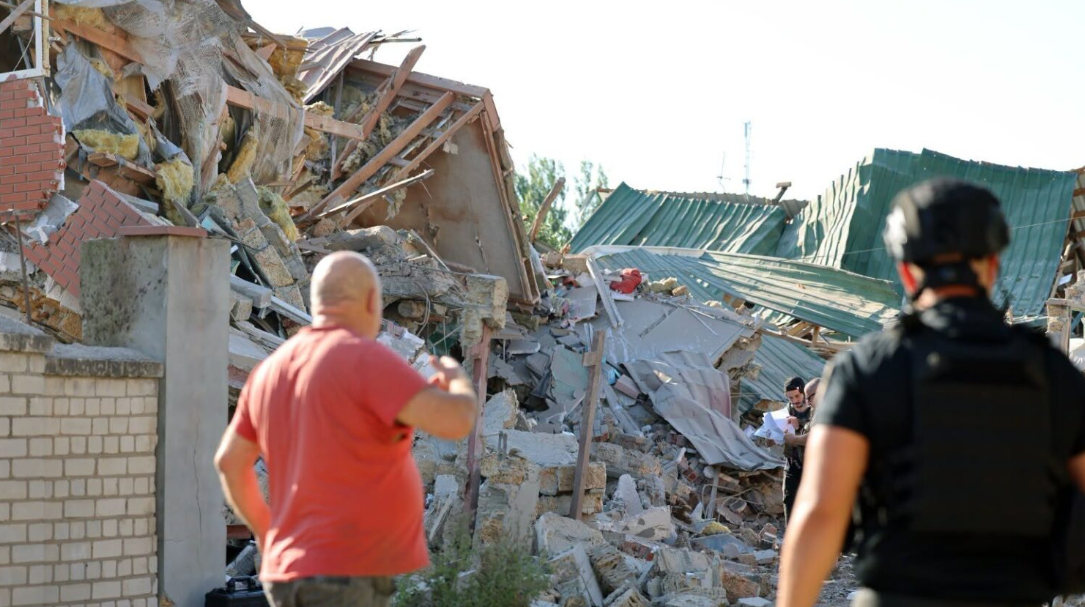
On August 1, settlements in the deoccupied territory of Kherson region were under numerous attacks by Russian drones of various types and artillery fire. Russian aircraft also struck the regional center with guided bombs. As a result of the Russian aggression, a woman died, 30 civilians and a civilian police officer were injured. The hits also damaged four high-rise buildings and 75 private houses, five garages, nine civilian cars and two medical vehicles, two hospital buildings, a library and an educational institution, an administrative building and an outbuilding of an emergency medical station, a store, and a warehouse.
The regional center, Antonivka, Blagovishchenske, Tomina Balka, Stanislav, Oleksandrivka, Shyroka Balka, Sofiivka, Sadovoe, Darivka, Mykilske, Zelenivka, Bilozerka, Priozerne, Komyshany, Kizomys, Molodizhne, Lyubimivka, Ukrainka, Bilyaivka, Myrolyubivka, Zolota Balka, Vesele, Kozatske were under Russian attacks.
As reported, Russian aircraft struck residential areas in the Central District of Kherson with three guided bombs. As a result, a 54-year-old woman was fatally wounded. Ten men aged 25 to 70 and nine women aged 21 to 72 suffered injuries of varying severity. At least 64 private homes, a library, a civilian car, buildings of two medical institutions, and a warehouse were also damaged.
In Zelenivka, a Russian FPV drone hit a car moving along the road. As a result, the vehicle received mechanical damage and the driver of the car, a 49-year-old civilian police officer, suffered a concussion.
In the Korabelny district, as a result of drone attacks, a 38-year-old man received an explosive and closed craniocerebral trauma, a concussion and shrapnel wounds to the abdomen and both legs, a 34-year-old man suffered an explosive trauma, a concussion, and a shrapnel wound to the leg. A 72-year-old city resident received a mine-explosive trauma, multiple shrapnel wounds to the torso, and a traumatic amputation of his right leg. His 73-year-old wife also suffered an explosive trauma and shrapnel wounds to the abdominal cavity.
In Mykilske, a 65-year-old local resident received a mine-explosive injury and shrapnel wounds to his leg and arm as a result of a Russian FPV drone explosion.
As a result of explosive devices being dropped from drones in the Korabelny district, a 38-year-old local resident received a mine-explosive injury, contusion, and nervous system disorder, and a 56-year-old grocery store employee was diagnosed with a blast injury and shrapnel wounds to her lower body.
In Darivka, a 69-year-old woman was seriously injured as a result of a strike drone attack.
Several times, operators of Russian guided aerial bombs attacked an emergency medical substation in the Dnipro district. The strikes damaged administrative and utility buildings, a garage, and two vehicles.
Drone attacks damaged a high-rise building in the Shumenskyi neighborhood and an apartment building in another location in the Korabelnyi district, three private houses and two garages in the Dniprovskyi district, a private residence in the Central district, a private house in Blagovishchenskyi, three cars and a private house in Priozernyi, an apartment building in Bilozerka, and two civilian cars in the Tavriyskiy neighborhood.
As a result of artillery shelling, a private house in Molodizhnyi, a private household in the Dniprovskyi district, four private residences, a garage, and a car in Komyshany were damaged.
In addition, a 62-year-old woman went to the hospital with complaints of worsening well-being. As it turned out, she received an explosive injury and concussion as a result of an airstrike on Muzykivka on July 31.
Women aged 44 and 68 also went to the medical facility. They are diagnosing explosive injuries and contusions that the victims received as a result of the attack by the Shahed drones on the territory of the Pivnichny microdistrict on July 29.
In total, Kherson region police investigators opened 16 criminal proceedings based on the facts of crimes committed by Russian servicemen on August 1. Forensic scientists, explosives technicians and police investigation and operational groups, as well as representatives of other emergency services, worked at the sites of Russian strikes.