
Russia targets Kyiv bridges with new munitions
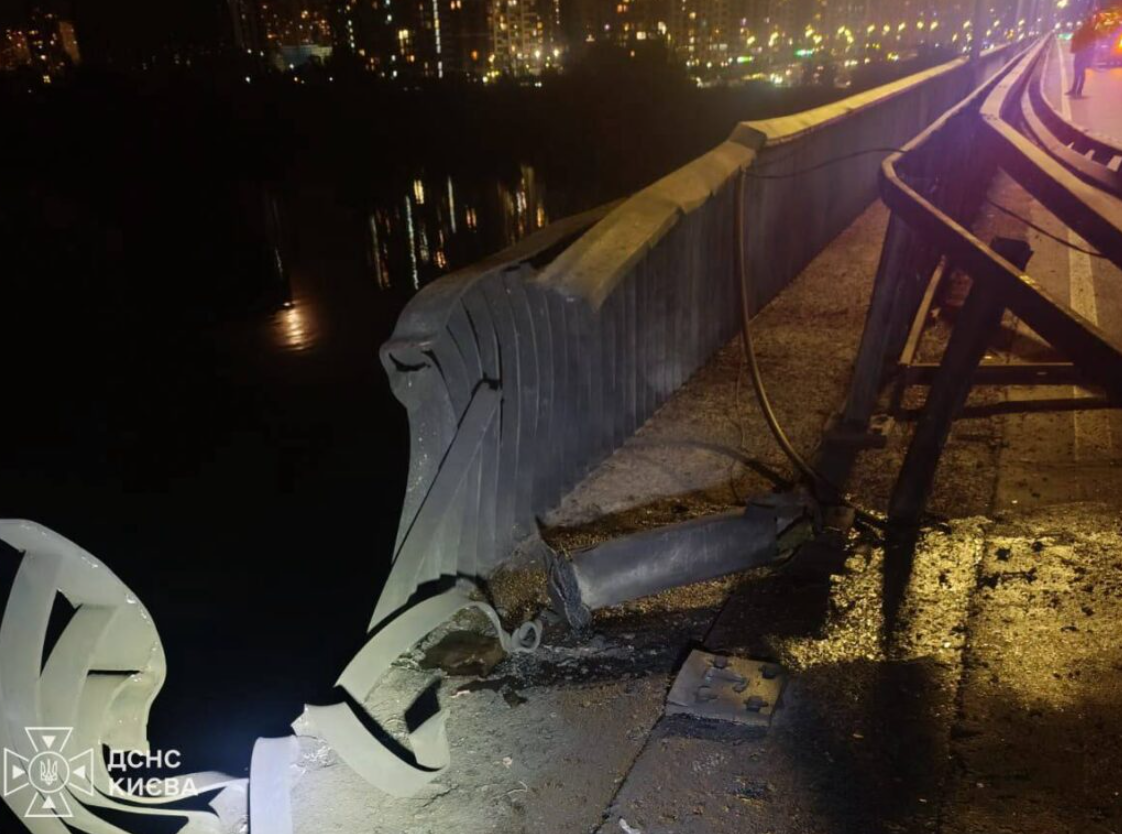
Since the beginning of October, Russia has attacked the South Bridge in Kyiv three times. The strikes damaged a support pier, the road surface, and metro protection elements, disrupting traffic across the crossing. Completely destroying such a bridge using drone strikes is extremely difficult; the attacks may be aimed less at physically collapsing the structure and more at temporarily taking the crossing out of service.
The South Bridge is notable for its cable-stayed design. One theory suggests that the Russian military may be testing a new strike-drone warhead against the bridge’s cables. This munition reportedly features a high-explosive charge combined with several small shaped-charge elements capable of damaging metal structures. Even without causing a collapse, such strikes can force municipal authorities to restrict traffic during air raid alerts and conduct additional safety inspections.
The South Bridge holds strategic importance for Kyiv, carrying both vehicular traffic and a metro line that connects the left and right banks of the Dnipro River. Vital logistics routes also pass through the capital, meaning damage to key crossings places an additional burden on other bridges. Strikes on bridges may be part of a broader Russian campaign targeting Ukrainian logistics and urban infrastructure.
Targets could include not only crossings but also railways, energy facilities, warehouses, data centers, schools, and kindergartens. The goal of such attacks may be to create a constant sense of danger and to exhaust the populations of major cities. Russia anticipates that prolonged infrastructure disruptions and transport issues will increase pressure on the Ukrainian government to negotiate on Moscow’s terms.
Russia’s previous attempts to force concessions through large-scale strikes on civilian infrastructure did not result in the Ukrainian capitulation the Kremlin had expected. It is noted that key crossings and transport hubs in Dnipro, Zaporizhzhia, Kharkiv, and Odesa could be at risk in the future.
Drone attack on Kyiv: cars catch fire in the Pecherskyi district
On the evening of October 5, a Russian drone attacked Kyiv. The impact caused cars parked in the courtyard of a high-rise building in the capital’s Pecherskyi district to catch fire. Emergency responders arrived promptly at the scene to extinguish the blaze and inspect the area.
Fire engulfed two passenger cars, and another vehicle sustained damage during the attack. The fire was quickly extinguished, preventing the flames from spreading to other vehicles, buildings, or surrounding infrastructure.
As of the time of reporting, there are no fatalities or injuries. Relevant services are currently assessing the circumstances of the property damage and the full extent of the attack’s impact. Residents are urged not to approach the site where debris or damaged structures might have fallen. Pecherskyi District is one of Kyiv’s central districts, home to residential buildings, office complexes, institutions, and urban infrastructure. The crash or impact of a drone in the courtyard of a high-rise building posed a threat to residents and anyone nearby. The primary consequence of the attack was that two vehicles caught fire.
Emergency responders focused on preventing the fire from spreading. Once the fire was extinguished, specialists inspected the surrounding area, checked the condition of the vehicles and buildings, and assessed potential additional damage. Such measures are essential even when a fire appears minor, as drone debris can pose a danger to people.
Fire and rescue units deployed to the scene immediately after the fire was reported. Their task was not only to extinguish the burning vehicles but also to inspect the area surrounding the fire’s origin. Vehicles in high-rise courtyards are often parked close together, meaning even a small fire can quickly spread to adjacent cars.
Promptly extinguishing the fire helped minimize risks to residents and prevent more extensive property damage. Following the initial response, the exact cause of the fire, the extent of the damage, and the procedure for property restoration can be determined. Final conclusions regarding the consequences are drawn after an inspection of the scene.
Drone attacks on the capital are frequently accompanied by debris falling in various districts of the city. Even if an aerial target is destroyed in the sky, its fragments can damage cars, windows, roofs, or other objects. That is why residents are advised to remain vigilant after an air raid alert ends and to avoid going outside unnecessarily immediately following explosions.
Residents of the Pecherskyi district are advised not to obstruct the work of emergency services or approach the scene of the incident unless necessary. Vehicles, debris, and damaged structures can remain dangerous even after a fire has been extinguished. Parents should explain to their children why they must not touch unfamiliar objects found outdoors.
The overnight drone attack on Kyiv has once again demonstrated that even a single impact in the courtyard of a residential building can cause a fire and property damage. Thanks to the prompt actions of emergency responders, the fire in the Pecherskyi district was extinguished, and there are no preliminary reports of fatalities or injuries. Further details regarding the aftermath of the strike will be released once all necessary inspections are complete.