
Russian attack damages book chamber in Kyiv: 15 million items at risk
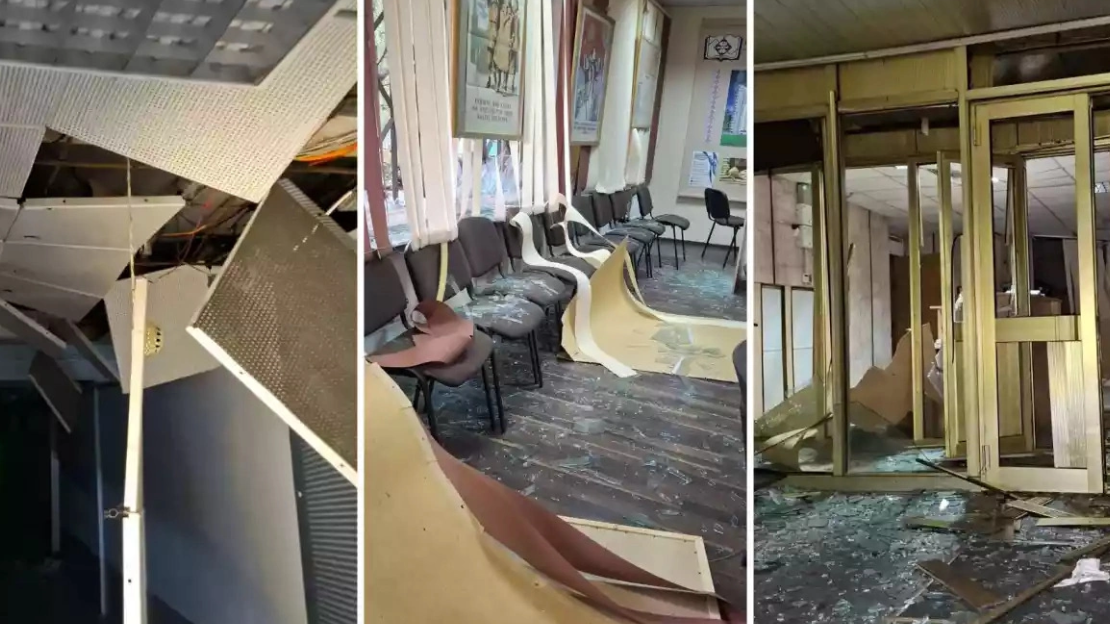
In Kyiv, the premises of the State Scientific Institution “Book Chamber of Ukraine named after Ivan Fedorov” sustained significant damage following a Russian missile strike on the night of October 19. The strike occurred near the building, and the blast wave caused extensive damage to the book repositories, administrative offices, and other areas of the institution.
According to the Director of the Book Chamber, Olga Vaskivska, two ballistic missiles landed near the building. The attack shattered windows and damaged doors, walls, and ceilings throughout the premises. Staff are deeply concerned not only about the condition of the building itself but also about the potential impact on the unique archival collections housed inside.
Millions of Archival Items at Risk
With windows blown out and the building’s structure compromised, moisture could enter the book repositories. This poses a serious threat to paper documents, books, newspapers, journals, and other printed materials. High humidity can cause paper to warp, lead to the growth of mold, destroy bindings, and result in irreversible damage to the texts.
Preliminary estimates indicate that approximately 15 million archival items are at risk. This is a vast collection that holds not only scientific or bibliographic significance but also immense cultural and historical value for Ukraine. It houses materials that document the development of Ukrainian book printing, the press, the publishing industry, and public life.
Staff at the institution emphasize that the immediate priority is to seal off damaged windows and doors as quickly as possible. Plywood and other materials may be used to temporarily secure the premises and prevent precipitation from entering. Given the damage to the building, even a brief rain shower could pose additional risks to the archives.
Relocating the entire collection to another facility is currently not feasible. The sheer volume of the holdings, specific storage requirements, and the lack of an alternative site make evacuating the materials difficult. Therefore, it is currently crucial to promptly contain the impact of the attack within the Book Chamber building itself.
Specialists at the institution must assess the condition of the premises and identify which materials may have been damaged by debris, dust, temperature fluctuations, or moisture. Such work requires great care, as mishandling damaged documents could further deteriorate their condition. Once the situation has stabilized, a detailed inspection of the collections and the building’s structural elements will be necessary.
No staff members were injured
A security guard was inside the building at the time of the Russian attack. According to the administration, he was not injured. There are also no reported injuries among the staff of the Book Chamber of Ukraine.
Since this morning, employees have been waiting for law enforcement to arrive. They were instructed not to touch anything at the scene so that the environment could be preserved and the aftermath of the missile strike properly documented. Once the police have completed their work, the institution’s accounting department will assess the damages incurred.
Documenting the damage is essential for determining the scope of necessary restoration work. This includes repairing windows, doors, walls, and ceilings; reinforcing specific parts of the building; protecting book repositories from the elements; and inspecting the condition of utility systems. Additionally, any potential losses among the archival materials will need to be evaluated.
The Book Chamber of Ukraine continues to fulfill a vital state function, even amidst a full-scale war. Its collections are part of the nation’s cultural heritage, and the institution itself ensures the systematic collection, registration, and preservation of printed materials.
The building has repeatedly suffered from shelling
This is not the first time the Book Chamber of Ukraine building has been affected by Russian attacks. According to representatives of the institution, the premises were also struck by shelling in December 2025 and January 2026.
Repeated strikes place additional strain on the structure and complicate its full restoration. Each new instance of damage increases the risks to book repositories, archival storage rooms, and technical systems. At the same time, the persistent threat of shelling makes it impossible to guarantee the long-term safety of the building without comprehensive protective and repair measures. The Ivan Fedorov Book Chamber of Ukraine is a state scientific institution responsible for the state bibliographic registration and preservation of Ukraine’s printed materials. Its work is significant for libraries, scholars, educators, publishers, archivists, and anyone who works with Ukrainian books and periodicals.
Preserving the Book Chamber’s collections is important not only for current use but also for future research. Archival materials make it possible to trace developments in the Ukrainian language, literature, journalism, the publishing industry, and societal evolution. The loss of even a portion of such collections could have long-lasting consequences for the nation’s cultural memory.
A Russian attack on Kyiv on the night of October 19 also damaged other residential and non-residential buildings, an educational institution, and the Chernihivska metro station. Emergency services were deployed across several districts of the capital to address the aftermath of the strike and assess the damaged sites.
The damage to the Book Chamber serves as yet another reminder that Russian missile attacks threaten not only human lives and urban infrastructure but also Ukraine’s cultural heritage. The current priority is to protect 15 million archival items from moisture and further destruction, as well as to restore the damaged building as quickly as possible.