
Shehu Sani Warns Nigerians Against Joining Russian Army as Mercenaries
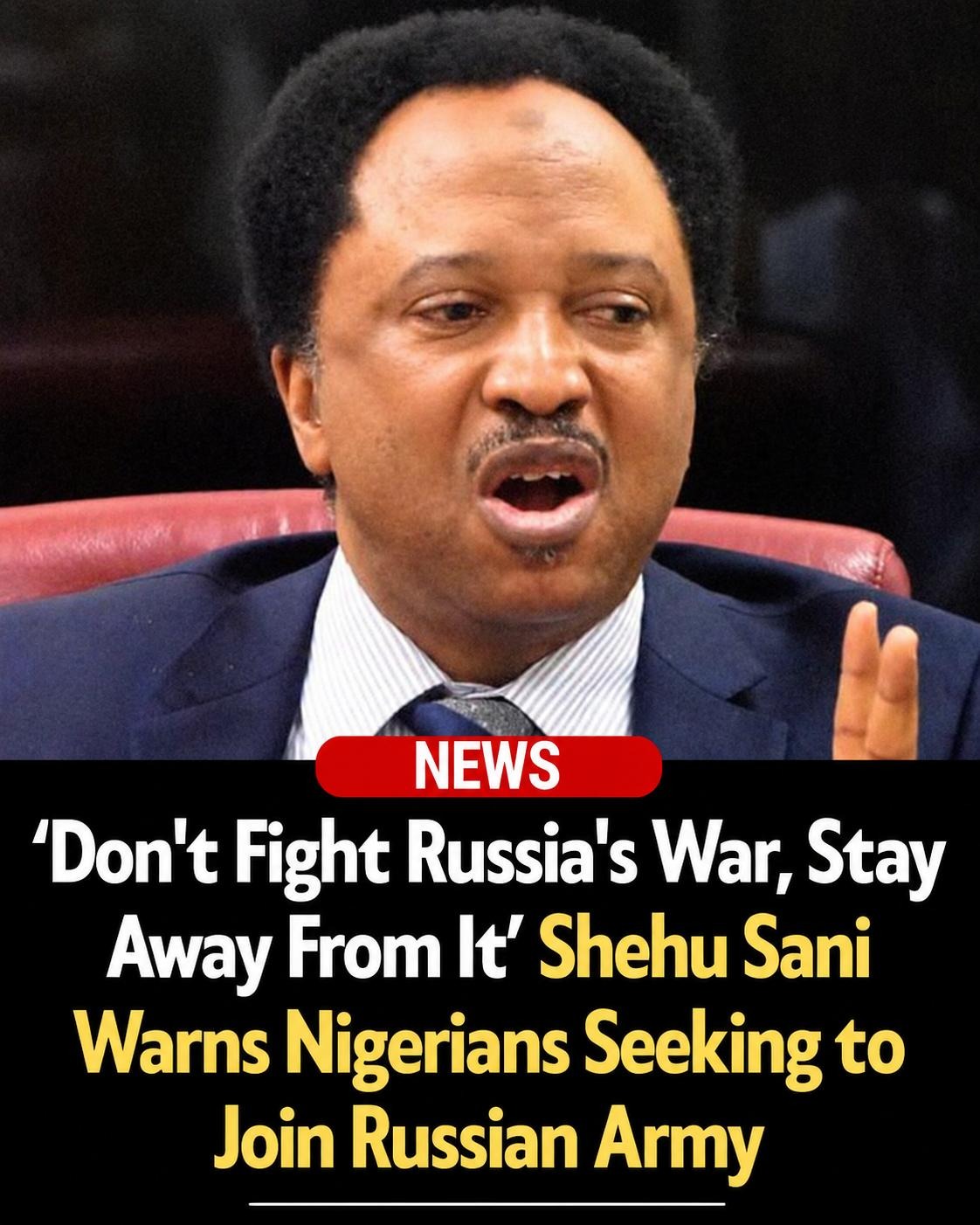
Former Senator Shehu Sani has issued a stark warning to Nigerians and Africans against enlisting in the Russian military amidst the ongoing Ukraine conflict.
Former Kaduna Central Senator and prominent civil rights activist Shehu Sani has issued a stark and urgent warning to Nigerians and other African nationals, urging them to resist recruitment efforts seeking to enlist them as mercenaries in the Russian military for deployment in the ongoing Ukraine conflict.
The public admonition, issued via his verified social media platforms on Thursday, addresses a deeply concerning trend of economic migration intersecting with geopolitical warfare. As the grinding conflict in Eastern Europe heavily depletes infantry ranks, international military recruiters have increasingly turned their gaze toward the Global South, exploiting severe economic vulnerabilities across Africa to funnel young men toward the frontline.
The Geopolitics of Mercenary Recruitment
Sani’s intervention highlights the grim reality facing many African youth who, driven by severe domestic inflation, currency devaluation, and widespread unemployment, are susceptible to lucrative foreign military contracts. “Nigerians and other Africans should desist from going to Russia to enlist in the Army for them to fight against Ukraine,” the former lawmaker stated categorically.
The mechanics of this recruitment often bypass official diplomatic channels. Operatives utilizing social media networks and shadowy employment agencies promise substantial signing bonuses, fast-tracked citizenship, and high monthly salaries paid in foreign currency. However, human rights monitors report that these recruits are frequently deployed as frontline shock troops in highly attritional combat zones, suffering disproportionate casualty rates with minimal tactical support or legal protections under the Geneva Conventions.
Unpacking the Historical Complexities
To dismantle the ideological narratives sometimes used by recruiters to appeal to African anti-imperialist sentiments, Sani provided crucial historical context. He acknowledged the Soviet Union’s historical backing of African liberation movements but stressed the geographical and political realities of the post-Soviet era.
“It’s a historical fact that Russia supported Africa during our independence struggle,” Sani noted, before delivering a critical caveat: “but Ukraine was also part of that USSR. Don’t allow yourself to be mercenaries.”
By reminding his audience that the defunct Union of Soviet Socialist Republics (USSR) encompassed both modern-day Russia and Ukraine until its dissolution in 1991, Sani dismantled the propaganda that framing participation in the war as an act of historical loyalty to Moscow. Both nations contributed deeply to the geopolitical leverage that aided African states in shedding colonial rule.
- Economic Vulnerability: High youth unemployment across West and East Africa creates a fertile environment for predatory international military recruiters.
- False Promises: Recruits are frequently misled regarding the lethality of the combat roles they are expected to perform upon arriving in theater.
- Historical Nuance: The shared Soviet legacy means African historical gratitude cannot logically be weaponized to target Ukrainian sovereignty.
- Diplomatic Fallout: Citizens fighting in foreign proxy wars risk severe domestic legal repercussions and destabilize their home country’s non-aligned diplomatic stance.
The Economics of Conflict Migration
The financial allure is difficult to overstate for citizens navigating collapsing local purchasing power. Whether quoted in US Dollars (USD) or Russian Rubles, the promised wages represent massive windfalls when converted into Nigerian Naira (NGN) or Kenyan Shillings (KES). This dynamic is not isolated to Nigeria; governments from Nepal to Cuba, and multiple East African nations, have detected illicit recruitment pipelines funneling their citizens toward the Donbas region.
In Kenya, the government has historically maintained strict penalties for citizens engaging in unapproved foreign military service, acutely aware of the radicalization risks. The deployment of private military contractors like the Wagner Group—now increasingly operating under the umbrella of the Russian Defense Ministry’s ‘Africa Corps’—has deeply intertwined Russian military objectives with African security architectures from the Sahel to the Central African Republic.
Global and Diplomatic Repercussions
For policymakers in Abuja, Sani’s warning reflects deeper diplomatic anxieties. The Nigerian government, like many African administrations, officially maintains a non-aligned stance regarding the Ukraine conflict at the United Nations General Assembly. However, the confirmed presence of Nigerian nationals participating in combat operations threatens to draw the ire of Western allies, including the United States and the European Union, who heavily monitor sanctions evasion and foreign fighter flows.
The tragedy of economic mercenaries underscores a fundamental failure of domestic policy across the continent. Until the structural economic drivers of youth desperation are addressed, the grim pipeline transporting African talent into foreign meat-grinders will remain an open, bleeding wound on the continent’s future.
Source: https://streamlinefeed.co.ke/news/shehu-sani-warns-nigerians-against-joining-russian-army