
There is a shortage of volunteers: the Russian army will now be replenished from the criminal world and deceived foreigners
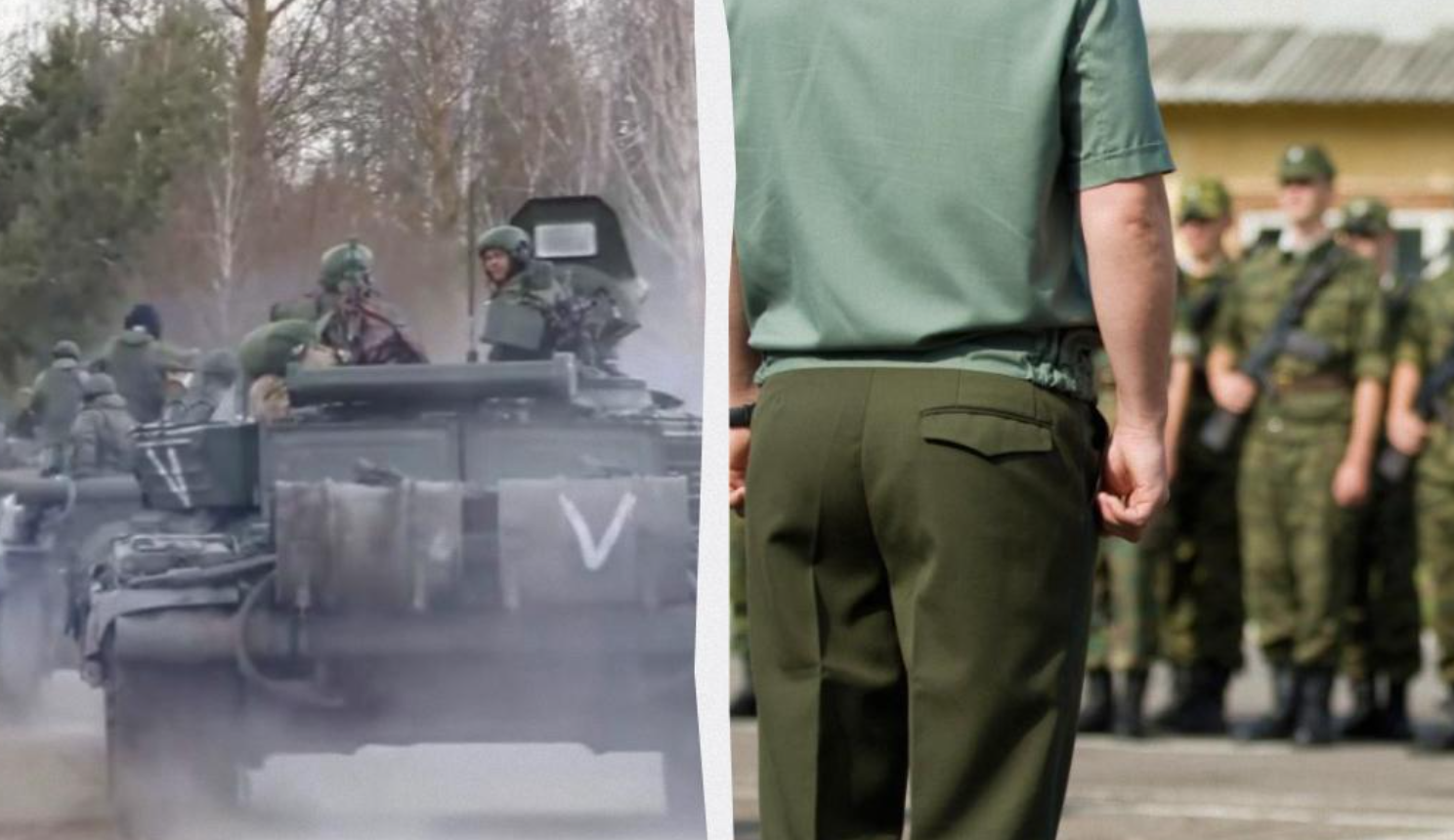
While Russians are increasingly signing up for contracts, the Russian army is being replenished by criminals and deceived foreigners.
The Russian State Duma has approved a law expanding the right of persons with criminal records to conclude military contracts with the Ministry of Defense. The law was adopted in all three readings in one sitting.
According to the new provisions, persons with outstanding criminal records, as well as defendants currently under investigation, will be able to enter military service on the basis of articles related to, among other things, participation in a gang (Article 209 of the Criminal Code of Russia), participation in a criminal organization (Article 210), drug trafficking (Article 229.1), and loss of documents containing state secrets (Article 284).
Meanwhile, Russia is recruiting more and more men from the world’s poorest countries to send to the front in the war against Ukraine. Deputy Defense Minister Viktor Goremykin told the State Duma that convicts who sign contracts will serve in special units under increased supervision.
The law passed the parliamentary stages in record time: the government submitted it to the State Duma less than a week ago. At the same time, the number of Russians volunteering to sign military contracts has been steadily declining in recent months, despite the large sums of money offered. Against the backdrop of this decline, rumors of a new wave of mobilization have intensified.
The media write that the idea is “discussed at all levels,” although a final decision has not yet been made. If such a decision is made, it is assumed that mobilization could begin after elections to the State Duma, the lower house of the Russian parliament.
How Russia is recruiting foreign nationals to fight in Ukraine
Charles Mutoka, a 72-year-old Kenyan, mourns the death of his son, Oscar Hagola Mutoka, a former soldier who went to Russia in the summer of 2025 in search of work.
His father said he tried in vain to convince him to give up the idea. Oscar did not tell him or other relatives where he was going, but a week after leaving, he sent a photo in military uniform – and showed no signs of life.
His family learned of his death a little later, but despite appeals to the Kenyan authorities, they were unable to return the body.
In May 2026, the family organized a symbolic memorial service and set up a makeshift burial site for Oscar – so that they would at least have a place to pray. “The hardest thing is that I don’t know if he was buried at all or where, or if his body was just dumped in some forest in Russia,” said Charles Mutoka.
Oscar Mutoka is one of an estimated 27,000 or more foreign nationals recruited by Russia for the war against Ukraine. A joint study by the International Federation for Human Rights (FIDH), the human rights organization Truth Hounds, and the Kazakhstan International Bureau for Human Rights and Rule of Law (KIBHR) provides evidence that Russia has created a global network to recruit foreign nationals.
“This recruitment is aimed at people who are economically, socially, and legally vulnerable. The methods used range from attractive offers to deception and even coercion,” said Ilya Nusov, one of the study’s authors.
“I don’t want to starve to death in Cuba”
For many people living in the poorest parts of the world, the salaries offered by the Russian army are a huge incentive, as they offer a chance to escape poverty and support their families.
That’s why Yoan Viondi Mendoza, a Cuban citizen, decided to go to work in Russia. He was promised $2,000 (about 82,000 hryvnias) a month – a huge sum by Cuban standards, where the average salary is $20 (about 820 hryvnias).
Yoan wanted to emigrate to the United States and reunite with his brother, but this proved impossible due to financial and bureaucratic obstacles. Then he came across a job offer in Russia, his brother said. “Ioan called me and said he had found a way out. He told me about some ‘project’ in Russia,” said Duro, who tried in vain to convince his brother. The boy was only 23 at the time.
Then, in 2023, he told reporters that he knew exactly where he was going and that he did not want to starve to death in Cuba. He also showed a document that was supposedly a contract with the Russian army and that supposedly also granted him Russian citizenship.
Duro said that his brother was sent to the front in Ukraine and then tried to escape. “He begged, ‘I made a mistake. Forgive me. Please get me out of here quickly,’” Duro said, adding that he had no further contact with him after that.
Ioan’s name later appeared on lists of foreign nationals killed in action published by Ukraine.
“We were used as human shields”
While Mendoza and Oscar Mutoka likely knew they were heading to Russia to fight in the war against Ukraine, many other foreign nationals are being tricked into joining the front lines with promises of jobs in construction, security, logistics or agriculture.
That’s what happened to Arman Mondol from Bangladesh. He wanted to work abroad to lift his family out of poverty. His father, a farmer, sold some of his property and took out a loan to pay a recruiter. Mondol was told he would work as a packer in a warehouse.
He traveled through Saudi Arabia to Russia on a tourist visa, where he was then forced to sign a contract in Russian, which he could not read.
Mondol said he and other foreign nationals in the Russian army were mistreated. “When we were on missions, we were always sent forward, while they stayed behind us. We were used as human shields and pushed into the thick of the fighting,” he said.
During one such mission, his car hit an anti-personnel mine. He was one of two survivors, taken to a military hospital, from where he managed to escape. Eventually, the Bangladesh embassy in Moscow helped him return home. But the war continues to haunt him.
Upon returning to his village, he was unable to find work.
Mercenaries or human trafficking
Foreign nationals fighting for Russia in Ukraine are often called mercenaries. However, Nusov explained that, strictly speaking, under international law, they are not considered such, as people often take Russian citizenship before joining the military.
Others, however, had no intention of fighting at first. They could be considered victims of human trafficking if they were recruited under false pretenses and forced. This violates the UN Convention against Transnational Organized Crime and the Palermo Protocol, which prohibits human trafficking and has been ratified by most countries in the world, including Russia.
Russia has insisted that all foreign nationals participating in the “special military operation” – as it calls its war in Ukraine – are involved voluntarily. For example, in March, Russian Foreign Minister Sergei Lavrov said at a press conference with his Kenyan counterpart that “no one is hired, just as no one is recruited in the case of a ‘special military operation’. Volunteers arrive there in full compliance with Russian law.”
Growing Number of Foreign Nationals Recruited
The recruitment of foreign nationals into the war is drawing increasing attention, with families protesting from Nepal to Peru. Some politicians, including Indian Prime Minister Narendra Modi, have even raised the issue in meetings with Kremlin dictator Vladimir Putin.
According to press reports, Russia restricted the recruitment of citizens from various “friendly” countries in February 2026. The list of those countries has not been made public.
“In some cases, this has helped reduce or even stop the flow of fighters from certain countries, at least temporarily,” Nusov said. “However, we believe that Russia also has ways to circumvent this restriction, reducing recruitment in one place and focusing on another country.”
According to the Ukrainian Coordination Headquarters for the Treatment of Prisoners of War, Russia could recruit up to 18,500 foreign nationals in 2026.